Test soil pH before you feed acid-loving plants, then choose an organic fertilizer that matches what the soil and plant are missing. A dilute liquid feed can support growth; it cannot correct alkaline soil. For azaleas and rhododendrons, protect shallow roots by following label rates and avoiding heavy nitrogen feeding as cold weather approaches.
If new leaves are pale with green veins, check soil and irrigation water before buying more fertilizer. The plant may have nutrients around its roots but be unable to use them.
Know Your Plant’s Soil pH Needs
Acid-loving plants need a low enough soil pH to take up nutrients such as iron. Around pH 4.5 to 5.5 suits many familiar acid lovers, but the target varies by species. Identify the plant before asking a lab to interpret your soil results.
A history of lime or wood ash matters because both raise pH. Tell the lab if either has been applied; adding fertilizer will not undo their effect.
Start This Week by Testing the Soil and Your Water
Use a laboratory soil test before deciding how to change pH. Inexpensive meters can help track trends, but they are not a sound basis for calculating sulfur or lime applications.
- Collect soil from several spots within the planted root zone, following the lab’s sampling depth instructions.
- Combine samples from the same bed. Keep areas with different growing conditions separate.
- Ask your water utility for hardness and alkalinity figures, or test a private water supply.
- Use the results to separate a nutrient shortage from a pH problem before choosing a feed.
Where to Take the Soil Sample
Sample beneath the plant’s canopy, away from the trunk, rather than in the neighboring lawn. For shallow-rooted azaleas, the upper soil matters most. Avoid including surface mulch or visible fertilizer granules in the sample.
Check Your Water Too
Water alkalinity measures its ability to neutralize acidity; hardness alone does not tell the whole story. Repeated irrigation with high-alkalinity water can raise root-zone pH. Rainwater may help where collection is practical, especially for containers that depend entirely on irrigation.
Why Salt Burn Looks Like Drought in Azaleas
Azaleas and rhododendrons have shallow, fibrous roots, so concentrated fertilizer reaches them quickly. Too much dissolved salt makes it harder for roots to take up water. Organic products can also cause damage when overapplied.
Brown leaf edges and wilting in damp soil after feeding are reasons to suspect fertilizer injury. Stop feeding. If the soil drains freely, water thoroughly to help move excess salts below the roots; do not keep soaking an already waterlogged bed.
Through November, Avoid Pushing Tender Growth
Heavy nitrogen feeding in late autumn can encourage soft growth that frost damages. November conditions differ sharply between northern gardens and warmer southern areas, so use local temperatures and the plant’s growth cycle rather than a nationwide cutoff date.
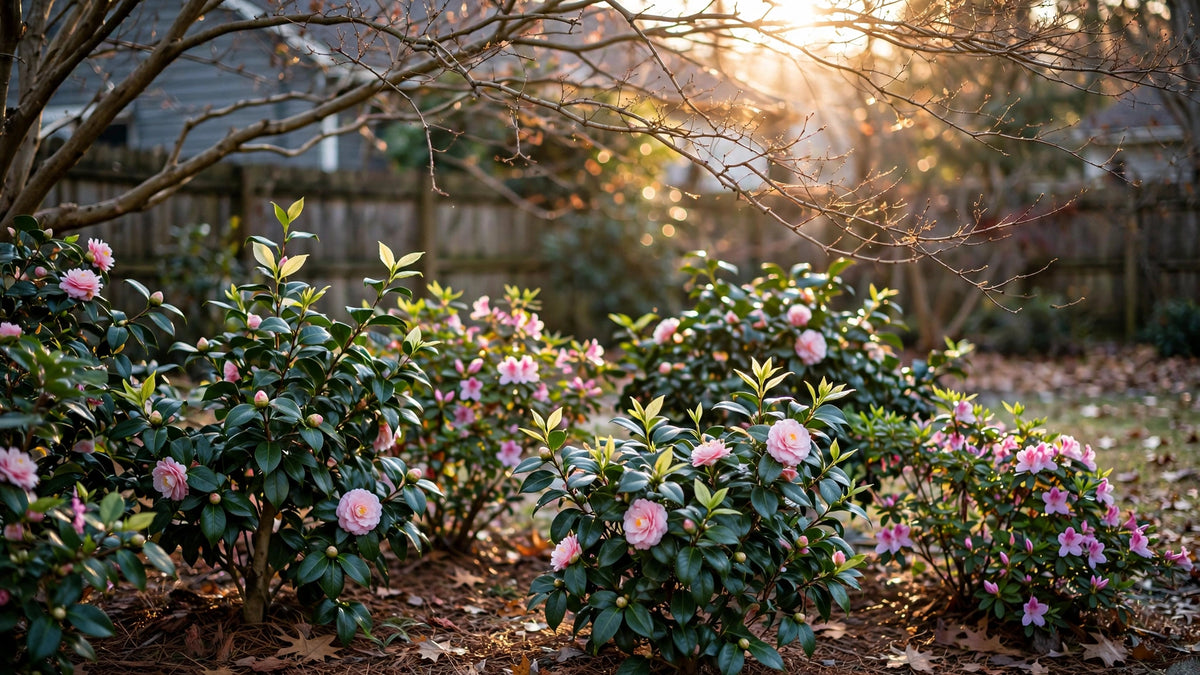
Camellia bud development varies by type and climate. Flower buds alone are not a reason to feed. Follow plant-specific guidance, and avoid trying to force growth as temperatures fall.
Liquid Kelp and Humic Acid Do Different Jobs in an Acid Bed
Choose these inputs by their role: kelp supports plant vigor, while humic acid is a soil amendment. Neither replaces a nutrient program based on soil results.
Liquid Kelp as a Dilute Drench
Liquid kelp can support general plant vitality and stress tolerance. Apply a dilute drench at the label rate, rather than making a stronger mix for a struggling plant. Our Organic Liquid Kelp is an option for that supporting role, not a treatment for alkaline soil.
Humic Acid on a Regular Schedule
Humic acid can help soil hold and release nutrients. Treat it as part of ongoing soil care, not an emergency iron treatment. See our Organic Liquid Humic Acid soil amendment for product information, and follow its directions alongside your soil-test recommendations.
When Should You Feed Azaleas and Rhododendrons?
Spring growth is a useful cue to reassess feeding, not an automatic instruction to fertilize. Healthy plants in well-managed soil may need little extra nutrition. If a test indicates a need, begin with the labeled application rate.
- Check for active spring growth and review the soil-test recommendation.
- Measure the fertilizer and water accurately. A stronger mix will not correct poor uptake.
- Distribute the feed evenly over the root zone, keeping it away from the trunk.
- Follow the label’s watering directions and avoid applying to drought-stressed roots.
- Repeat only as needed within label guidance, avoiding late-season nitrogen that pushes tender growth.
What Pale Leaves With Green Veins Usually Point To
Pale new leaves with green veins often indicate iron chlorosis: the plant cannot take up enough iron. In acid-loving plants, high root-zone pH is a common cause. Adding more general fertilizer can leave the underlying problem untouched.
Check soil pH and water alkalinity before choosing an iron treatment. Iron added without addressing alkaline conditions may become unavailable again.
Why Lime and Wood Ash Undo an Acid Bed
Keep lime and wood ash away from acid-loving beds unless a soil test specifically calls for a pH increase. Both can make iron harder for these plants to obtain. If pH is already too high, ask your extension office or soil lab for a correction plan suited to the soil.
What Lowers pH Slowly
Acidic organic materials such as peat moss or suitable partially decomposed bark can help create a more appropriate root environment. Their effect depends on the starting soil and how they are used. Mulch on its own will not change soil pH in any useful time frame.
Some fertilizers can acidify soil over time, but feeding and pH correction are separate decisions. Do not increase a fertilizer dose to chase a lower pH.
When Organic Feeding Is Too Slow and When to Call a Pro
Some organic feeds depend on microbial activity to release nutrients. That process varies with temperature and growing conditions, making performance less predictable in containers. Organic does not automatically mean better for a plant that needs a prompt correction.
A water-soluble fertilizer may supply nutrients more directly, but it still cannot repair damaged roots or unsuitable pH. Choose it only after identifying what the plant lacks.
Container-Grown Acid Lovers
In a pot, roots have little room to escape excess fertilizer. Use the product’s container directions rather than a blanket half-strength rule, and make sure drainage holes remain clear. If salts accumulate, leach the mix with suitable water only when drainage allows excess water to escape.
When the Plant Keeps Declining
If soil and water tests do not explain the decline, have a local nursery specialist or extension agent assess the roots and plant. Persistent wetness or root disease will not respond to extra feeding.
For help choosing among our products once you have test results, use the GS Plant Foods contact page. Include the plant name and whether it grows in a bed or container.
Frequently asked questions
What plants require acidic fertilizer?
Acid-loving plants require suitable soil pH, not necessarily a fertilizer labeled “acidic.” Blueberries and azaleas are familiar examples, but their exact requirements differ. Choose fertilizer from the plant’s needs and soil-test results rather than the label name alone.
Are azaleas acid-loving plants?
Yes, azaleas need acidic soil to take up nutrients well. Their shallow roots are also sensitive to concentrated fertilizer. Follow labeled rates and check pH if new leaves turn pale while their veins stay green.
What makes soil acidic?
Soil acidity reflects its parent material, rainfall, organic matter and management history. Suitable acidic amendments can help lower pH, but their effect depends on the soil’s resistance to change. Use a soil test to choose a correction method rather than relying on mulch alone.
Is potting soil acidic?
Some potting mixes contain acidic peat, but manufacturers may add lime to adjust the finished pH. Check the stated pH range or test the mix. A peat-based ingredient list does not guarantee that the mix suits an acid-loving plant.
Can liquid kelp fix a soil pH problem?
No. Liquid kelp supports plant vigor and stress tolerance, but it is not a reliable soil acidifier. Test the root zone and address unsuitable pH before expecting a feeding program to help.
Share:
Fish Fertilizer on Tomato Plants: How Much to Spray and When
Peace Lily Fertilizer: How Much to Feed and When to Stop