

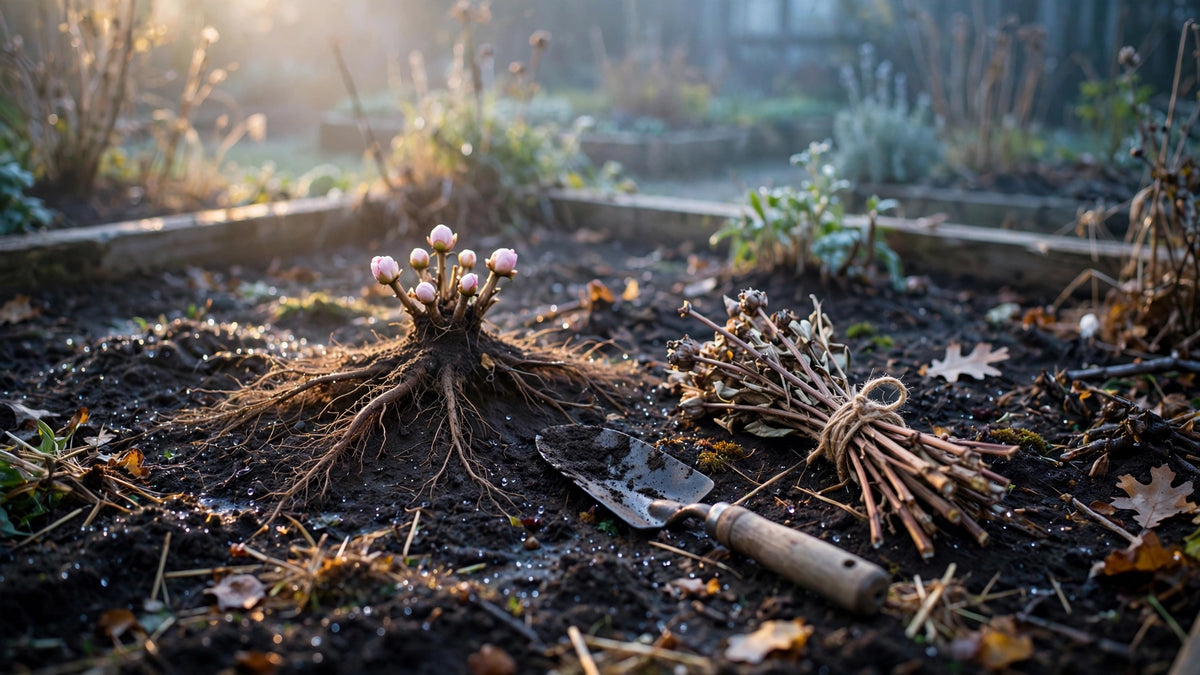
Newly planted bare-root peonies usually need well-finished compost, not fertilizer in the planting hole. Keep the eyes just below the soil surface, and skip fresh manure and high-nitrogen feeds. If you choose a liquid supplement, use it sparingly around the roots, never over the crown. Feeding at planting is optional.
For northern and transitional-zone gardeners planting in fall, the priority is root establishment before winter. Fertilizer cannot make up for a deeply buried crown or soil that stays wet.
Why October Is the Right Time to Plant Bare Roots
Purdue Extension's undated guide to growing peonies in Indiana recommends October planting. Dormant plants are less prone to injury, and freshly dug stock has had less time to suffer storage damage. Fall-planted peonies usually grow more vigorously during their first season than those planted in spring, which can have reduced flowering.
That October recommendation is useful for Midwest gardeners, not a nationwide planting deadline. Follow your state extension's timing for your climate. Purdue notes that peonies can grow and bloom for more than 50 years, so choose the site with a long-lived plant in mind.
Prepare the Bed a Foot Deep Before You Dig the Hole
Purdue recommends preparing soil at least a foot deep and mixing in generous organic matter such as compost. Improve the bed before setting the roots rather than concentrating amendments beneath the crown.
- Loosen the bed at least a foot deep. Break up compacted clumps so roots have room to spread.
- Mix in well-finished compost. Distribute it through the soil instead of leaving a pile at the bottom of the planting hole.
- Space plants 3 to 4 feet apart. Purdue recommends this spacing for air circulation and disease reduction.
- Keep concentrated amendments away from the eyes. Do not place a handful of fertilizer against the crown.
If water collects in the planting area, address drainage before planting. Adding fertilizer to a wet bed will not protect the crown from rot.
Set the Eyes Just Below the Surface
The pink buds, called eyes, belong just below the soil surface. Position them facing up, with the roots extending downward. Planting too deep is a common reason peonies produce leaves without flowers, and extra fertilizer will not correct it.
Lay a straightedge across the hole to check the eyes against the finished soil level before backfilling. Do not judge depth from the bottom of a loose mound that may settle after watering.
Use your state extension service's peony guide for the exact planting depth recommended in your climate. A regional recommendation is more useful than applying one depth across the country.
Work loose soil around the roots, then firm it gently to remove large air pockets. Water the planting and check that the crown has not settled too deeply.
Keep Fresh Manure and High-Nitrogen Fertilizer Off the Eyes
Keep fresh manure out of a new peony bed. Its salts and ammonia can injure tender tissue, especially when it sits against the eyes. Well-finished compost is the better planting amendment.
High-nitrogen lawn fertilizer is another poor choice. Martha Stewart's May 31, 2026, gardening guide quotes author Kathy Jentz on the disease risk associated with high-nitrogen feeding and recommends a low-nitrogen bulb-type fertilizer. Check the NPK label rather than assuming any garden fertilizer suits peonies.
The first NPK number represents nitrogen. More nitrogen is not a shortcut to more flowers; excessive feeding can encourage leafy growth at the expense of bloom.
Should You Feed at Planting, and What Should Go in the Liquid?
Compost alone is a sound choice when the soil is already in decent condition. One expert quoted in Martha Stewart's May 2026 guide recommends amending with peat and using a light leaf-compost mulch, with no fertilizer at planting. A newly planted peony does not automatically need a liquid feed.
If you choose to feed, keep the solution weak and away from the eyes. Apply it to the surrounding soil rather than pouring it over the crown. Overfeeding can injure roots and reduce flowering, so do not add a second product simply because the first is organic.
GS Plant Foods' Organic Liquid Kelp Seaweed is an optional supplement for plant vitality and stress tolerance, not a substitute for soil preparation. Kelp should not be assumed to provide balanced NPK nutrition. Check the product's application directions before using it around new roots; there is no need to feed simply because you have a bottle available.
Backfill Firmly and Mulch Lightly Before Winter
A light winter mulch can help protect the root zone from heaving as the ground freezes and thaws. Keep it away from the crown. Leaves packed over the eyes hold moisture where you do not want it.
- Cover the surrounding root zone. Leave the crown clear rather than burying it beneath mulch.
- Use a light, loose layer. Avoid a dense mat of wet leaves.
- Check after a thaw. Pull back any material that has shifted against the crown.
Cut Back After the First Hard Frost and Feed Once the Shoots Are Up
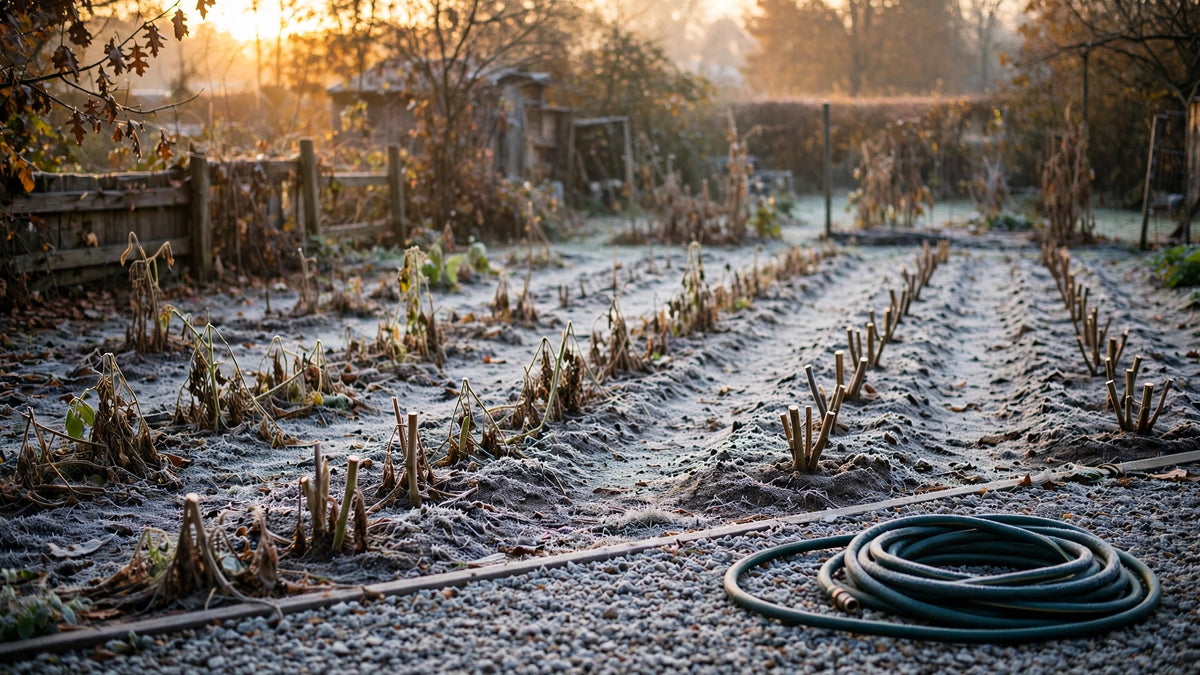
For herbaceous peonies, wait until a hard frost kills the foliage, then cut back the dead stems and remove the debris. Botrytis can overwinter on infected plant material. This cleanup reduces a disease source; fertilizer does not.
Leave the soil around the crown undisturbed. Peonies have shallow roots, and digging to inspect them can cause damage.
Wait until spring shoots are up and growing before considering another feed. Apply it around the drip line, away from the stems. Use a light application rather than trying to force a young plant into flowering. If a young peony looks weak, check its planting depth first, then look for standing water or signs of disease before adding more fertilizer.
Our 20-20-20 All Purpose Fertilizer with Kelp supplies balanced NPK, but it is not a low-nitrogen bulb fertilizer. If you choose it for spring feeding, follow the application directions and keep the solution off the stems. The equal numbers describe nutrient proportions, not a guarantee that a strong application is suitable.
Peonies generally prefer near-neutral soil, roughly pH 6.5 to 7. Test before adding lime or sulfur. Correcting a drainage problem matters more than chasing a small pH adjustment.
Frequently asked questions
Should I cut back my peonies for winter?
Cut back herbaceous peonies after a hard frost has killed the foliage. Remove the dead stems and fallen leaves because Botrytis can overwinter on infected debris. Do not apply this cutback advice to the woody stems of tree peonies.
Are peonies acid-loving?
No. Peonies generally prefer near-neutral soil, roughly pH 6.5 to 7. Use a soil test before adding lime or sulfur rather than trying to adjust pH by guesswork.
Are coffee grounds a good fertilizer for peonies?
Coffee grounds are not a balanced fertilizer and are not a reliable way to adjust soil pH. Keep them out of the planting hole; well-finished compost mixed through the bed is the more useful amendment. Used grounds can go into your compost pile instead.
Why won't my young peony bloom?
Check planting depth first, because deeply buried eyes can produce leaves without flowers. A newly planted peony may also need time to establish, while poor drainage or excessive nitrogen can interfere with growth and flowering. Before choosing a feed, compare the NPK and application directions on our plant-food pages with what your soil actually needs.
Share:
Christmas Cactus Fertilizer: When to Feed and When to Stop
Organic Compost for Gardening: Bagged, Bulk or Liquid Spray?