
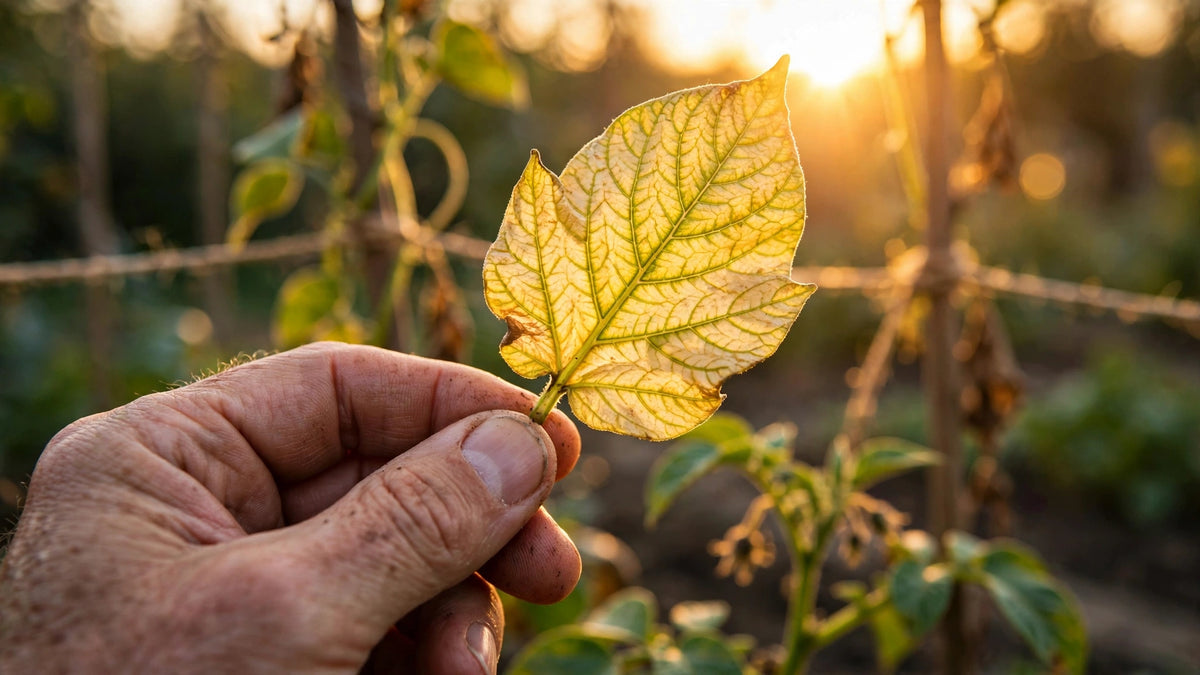
Potato leaves turning yellow usually mean one of two things: the crop is maturing, or the roots are under stress. Check the plant’s age and soil moisture before adding fertilizer. Gradual yellowing in the weeks before harvest is normal. Yellowing on young plants, especially with watery rot or damaged new growth, needs closer attention.
The calendar alone doesn’t tell you whether a potato crop is finished. Use the planting date, the harvest stage and the leaf pattern to decide whether to feed or let the plants finish.
Where the Yellow Starts Tells You Which Problem It Is
Nitrogen shortage usually shows on older, lower leaves first. The plant moves nitrogen from those leaves into new growth, leaving the bottom pale while the top stays greener. Shaded lower leaves can also yellow normally, so a few yellow leaves don’t prove a deficiency.
Iron shortages show on the newest growth because the plant cannot readily move iron from older tissue. Magnesium shortage usually starts on older leaves, with yellow tissue between green veins. Check both the leaf’s position and its pattern before choosing a fertilizer.
Is the Potato Vine Finishing or Failing?
Natural yellowing commonly begins two to three weeks before harvest, often around 90 to 120 days after planting. Variety and growing conditions affect that timing. The vines gradually turn brown and die back as the crop finishes.
A young plant yellowing well before harvest needs a different response. If the top is still green and flowering, don’t assume the crop is finished because a few lower leaves have yellowed.
| Sign | Probably maturing | Probably a problem |
|---|---|---|
| Where the yellow starts | Older lower leaves, gradually moving upward | Newest growth or much of the plant at once |
| How it spreads | Gradually in the weeks before harvest | Through a healthy-looking bed within days |
| Top growth | Declining with the rest of a mature vine | Yellowing while the crop is still young |
| Stage of the crop | Near the variety’s expected harvest time | Well before expected maturity |
| Leaf texture | Gradually drying as vines die back | Watery decay or wilting while soil stays wet |
Check the Water Before You Feed Anything
Soggy soil can yellow and wilt potato plants because waterlogged roots lack oxygen. Bone-dry soil can cause yellowing with crisp leaf edges. Fertilizer fixes neither problem.
Check moisture a couple of inches below the surface. Persistently saturated soil calls for less irrigation and a drainage check; dry soil calls for watering. In containers, check below the surface rather than judging by a dry-looking top layer.
Rule Out Late Blight Before You Feed a Potato Bed
Late blight causes rapidly spreading, watery leaf decay. Leaves collapse and turn brown, sometimes with white growth underneath in humid conditions. Brown stem lesions are another warning sign. This is not ordinary nutrient yellowing.
The Royal Horticultural Society’s potato blight guidance gives the following steps when about a quarter of the foliage is affected or stem lesions appear:
- Stop treating the symptoms as a feeding problem.
- Cut affected foliage near soil level.
- Rake up debris.
- Wait about two weeks before digging, allowing tuber skins to harden.
- Keep infected material out of compost. Use an appropriate municipal disposal service or bury it deeply.
- Rotate potatoes out of that bed for at least four years.
If you’re unsure whether the damage is blight, contact your local extension office promptly. Clear photos of a stem and both sides of an affected leaf help distinguish disease from nutrient trouble.
Nitrogen or Magnesium? Read the Veins
Uniform pale yellow on older leaves, accompanied by slow growth, suggests nitrogen shortage. Yellow tissue between green veins on older leaves suggests magnesium shortage. Hold a leaf up to the light to see the contrast.
Yellow tissue between green veins on new growth points toward a different issue, such as iron availability. Soil pH can lock up nutrients even when they are present in the soil.
The Royal Horticultural Society notes that magnesium deficiency can resemble early blight in potatoes. Brown lesions deserve a disease check rather than an automatic nutrient treatment.
Don’t add Epsom salt on a hunch. Confirm the leaf pattern and use a soil test before adding magnesium. If the results support supplementation, compare the label directions for Cal-Mag 420 Dry Super Concentrate with your crop’s needs.
How Foliar Feeding Works Late in the Season
Foliar feeding can supply nutrients through living leaves during a short late-season window. It cannot restore dead foliage or correct waterlogged roots. Consider it only when enough green tissue remains and the symptoms support a nutrient shortage.
Dilute Gently and Spray in Cool Hours
Follow the product’s foliar rate, using the gentler end of any labeled range for stressed plants. Spray during cool hours and cover leaf undersides as directed. Don’t substitute a root-drench rate for a foliar rate.
There is no dependable recovery deadline for yellow leaves. Watch healthy growth and whether symptoms stop spreading; a lack of improvement calls for another diagnosis, not a stronger dose.
Avoid Fertilizer Burn on Stressed Plants
Concentrated fertilizer can add salt stress when plants are already short of water. Organic products still need correct dilution. In its June 2026 response to a Michigan potato grower, Michigan State University Extension noted that fertilizer burn could explain some leaf damage without necessarily explaining whole-plant yellowing.
If feeding is justified, our organic liquid fish fertilizer supplies nutrients for vegetables. Follow its application directions rather than increasing the concentration to chase greener leaves.
When Should You Stop Feeding Potato Plants?
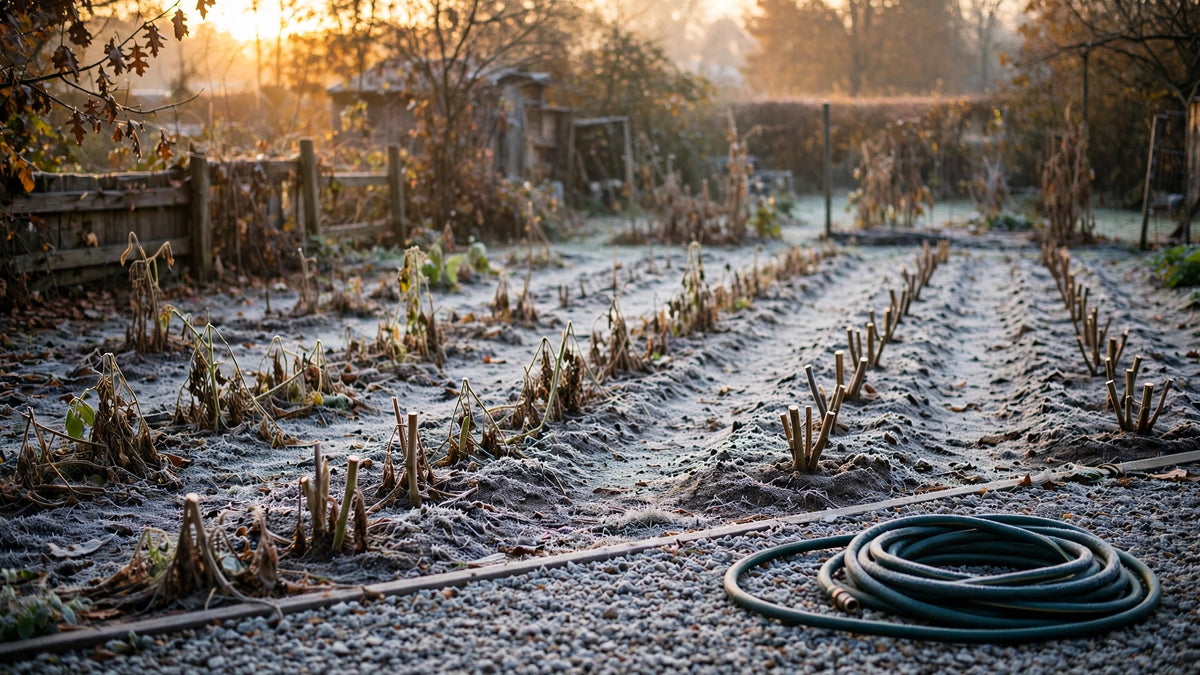
Stop feeding once the vines are dying back naturally. A mature crop needs to finish and set firm skins, not a growth-promoting application. If the plants are still green and flowering, these steps don’t apply yet, so go back to the diagnosis above.
- Compare gradual yellowing with the variety’s expected harvest date.
- Stop feeding as mature vines die back.
- Stop supplemental watering once foliage has died back naturally.
- Dig when skins are set. For blight-affected crops, follow the separate removal and waiting guidance above.
What to Do Before Next Season Starts
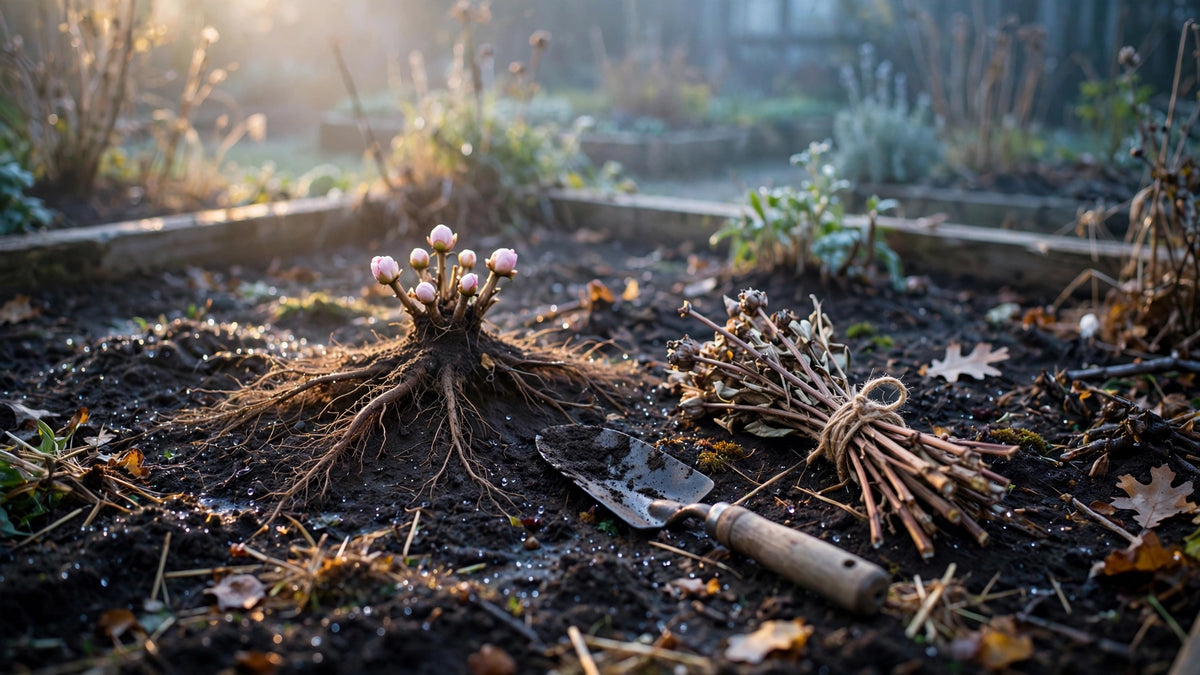
Test the soil in late fall or early winter before buying amendments. A test can identify pH and nutrient issues; assess drainage separately by checking how long the bed stays saturated after rain or irrigation.
For a larger vegetable planting, GS Plant Foods offers a Vegetable Farm Program for crop nutrition planning. Use your soil results and planting schedule to guide that conversation, rather than treating yellow leaves as a fertilizer shopping list.
Frequently asked questions
Will fertilizing potatoes late in the season hurt the tubers?
Fertilizing mature potatoes as the vines die back is unnecessary and can encourage growth when the crop should be finishing. Feed an actively growing crop only when there is evidence of a nutrient need. Stop feeding once natural dieback begins.
How fast does a liquid foliar feed work on yellowing leaves?
There is no reliable timeline because the response depends on the cause and how much healthy foliage remains. Foliar nutrients won’t fix blight or poor drainage, and damaged leaves may not turn green again. Look for healthier growth and symptoms that stop spreading.
Is yellowing from disease different from yellowing from hunger?
Nutrient shortages often follow a leaf pattern, such as older leaves turning uniformly pale. Late blight instead causes rapidly spreading watery decay, sometimes with white growth beneath leaves or brown stem lesions. Ask your local extension office for help if damage spreads within days or the cause is unclear.
Does overwatering cause yellow potato leaves?
Yes. Saturated soil deprives roots of oxygen and can cause yellowing with wilting. Dry soil can also yellow leaves, often with crisp edges, so check below the surface before changing irrigation or adding fertilizer.
Share:
Organic Compost for Gardening: Bagged, Bulk or Liquid Spray?