Key Takeaways
-
Container herbs need more frequent feeding at lower concentrations; dilute to half strength and feed every 2 to 4 weeks during the growing season.
-
Choose fertilizers where phosphorus and potassium are equal to or greater than nitrogen, like a 2-3-1 ratio, to support roots and flavor without excess foliage.
-
Liquid organic fertilizers like fish emulsion, kelp extract, and humic acid offer the best control for containers by releasing nutrients gradually and reducing salt buildup.
-
Avoid over-fertilizing, feeding at the wrong time of year, and neglecting soil quality.
-
GS Plant Foods offers a complete lineup for container herbs. From Fish & Kelp Blend for all-around nutrition to Humic Acid for improved uptake, our liquid organics are easy to dilute, pet-safe, and designed for the unique demands of potted plants.
Why Potted Herbs Need Special Fertilizer Attention
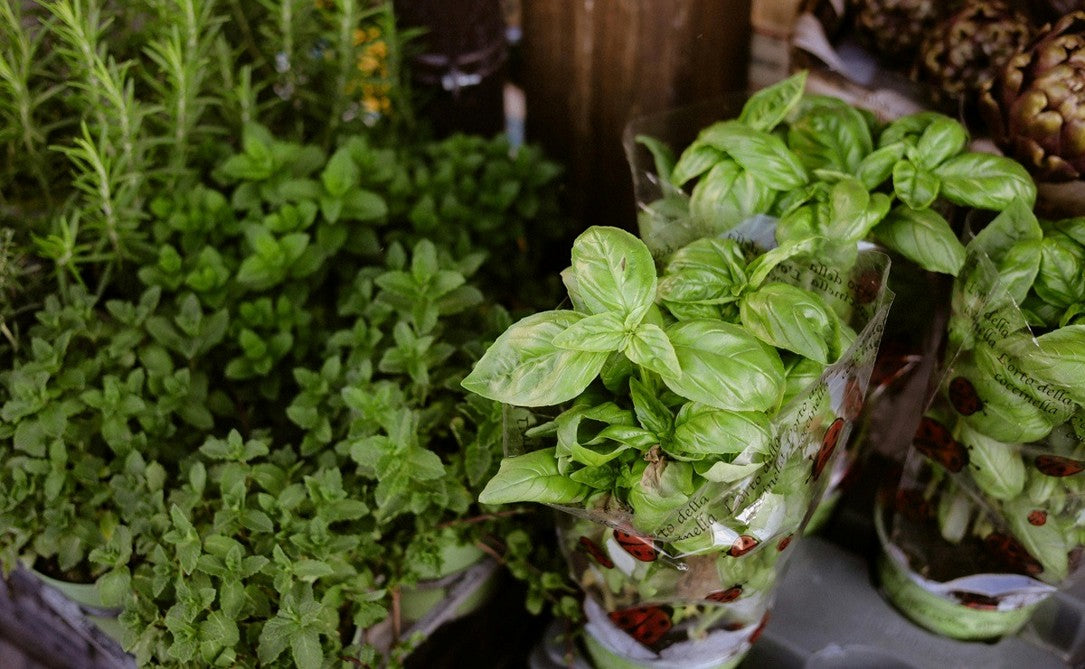
Container herbs face challenges garden plants don't. The limited soil volume means nutrients deplete faster, and frequent watering flushes them out before roots can absorb them. Unlike garden herbs that spread roots to find what they need, potted herbs depend entirely on what's in their container.
Containers also heat up and cool down faster than garden soil, which stresses plants and increases their nutrient demands. The solution: more frequent feeding at lower concentrations without the risk of root burn.
|
GS Plant Foods: Organic Fertilizers That Actually Work 12+ Years Proven Results | Trusted by 1M+ Customers | Pet & Kid-Safe
Grow Naturally Without Compromise:From bestselling Liquid Fish to proprietary blends like Green Envy, GS Plant Foods delivers professional-grade nutrition using kelp, humic acid, and seaweed extracts. Whether you're nurturing orchids, reviving your lawn, or caring for houseplants, their organic formulas absorb faster and reduce runoff—giving you visible results without harsh chemicals. Why Gardeners Choose GS:
Your plants deserve nutrition that works as hard as you do. |

Best Types of Fertilizers for Container Herbs
The ideal fertilizers for container herbs provide balanced nutrition while releasing nutrients gradually to prevent root burn and excessive foliage growth. There are basically two types of fertilizers that top the list.
Organic Fertilizers
Organic fertilizers feed both plants and the soil ecosystem. Liquid options like fish emulsion, kelp extract, and humic acid release nutrients gradually as soil microbes break them down. They are ideal for herbs that prefer steady, modest nutrition over sudden surges. Liquids also offer precise dilution control, which matters in containers where salt buildup is a risk.
For households with pets or young children, organic liquids offer peace of mind—no harsh chemicals that could harm curious noses or hands exploring your herb containers.
Hybrid Fertilizers
Hybrids combine synthetic NPK with organic components, such as kelp extract. They offer precision, plus the soil-health benefits of organic matter. A good example is the GS Plant Foods' 20-20-20 All Purpose Fertilizer with Kelp, which combines balanced synthetic NPK with organic kelp extract and chelated micronutrients.
It's an excellent choice for gardeners who want predictable results with the added benefits of organic absorption.
The Right NPK Ratio for Thriving Potted Herbs
The ideal ratio depends on what you're growing. Mediterranean herbs like rosemary, thyme, and sage prefer low nitrogen. Too much pushes leafy growth at the expense of essential oils and flavor. Leafy herbs like basil, cilantro, and parsley can handle more nitrogen, but still benefit from moderation in containers where overgrowth leads to weak, floppy stems.
For most potted herbs, look for fertilizers in which phosphorus and potassium (the second and third numbers) are equal to or greater than nitrogen. A ratio like 2-3-1 supports strong roots and plant resilience without excess foliage. Balanced formulas like 20-20-20 also work well, especially when diluted to half strength.
During peak season, feed leafy herbs monthly. Mediterranean types can go 4–6 weeks between applications.
Top 5 Fertilizers for Potted Herbs
1. Fish Emulsion: Fast-Acting Organic Nutrition

Fish emulsion delivers fast-acting nitrogen and amino acids ideal for leafy herbs like basil and cilantro.
Fish emulsion delivers a quick hit of nitrogen along with amino acids and trace minerals that synthetic fertilizers don't provide. Cold-processed versions (often called fish hydrolysate) retain more of these beneficial compounds than heat-treated alternatives.
The 2-3-1 NPK ratio works well for most container herbs. It provides enough nitrogen to support healthy leaves without pushing excessive growth. Fish emulsion has a smell, but it dissipates within a day or two. For indoor herbs, apply in the morning and let pots air out near an open window.
2. Seaweed/Kelp Extract: Stress Recovery & Root Support

Kelp extract provides 60+ trace minerals and natural growth hormones that help potted herbs handle stress.
Kelp extract is more of a plant tonic than a heavy feeder. It delivers 60+ trace minerals, natural growth hormones (cytokinins and auxins), and compounds that help herbs withstand heat, drought, and transplant shock. For potted herbs exposed to temperature swings on patios or windowsills, kelp builds resilience.
Use kelp as a supplement alongside a primary fertilizer, or as an alternate feeding. It's especially useful after repotting, during heatwaves, or when plants look stressed but aren't showing obvious nutrient deficiencies.
3. Fish & Kelp Blend: Best All-Around Option

A fish and kelp blend offers complete nutrition in one bottle—the simplest choice for container herb gardens.
If you want one bottle for your entire herb container garden, a fish and kelp blend is the simplest choice. You get the immediate nutrition of fish emulsion plus the trace minerals and stress-recovery benefits of kelp. The combined formula covers both feeding and plant health in a single application.
This is the "if in doubt, use this" option. Works for leafy herbs like basil and cilantro as well as woody Mediterranean types like rosemary and thyme.
4. Humic Acid: Nutrient Uptake Booster

Humic acid improves nutrient uptake, helping herbs get more from every feeding.
Humic acid is a soil conditioner that increases the availability of other nutrients to plant roots. Derived from decomposed organic matter, it improves the soil's ability to hold and release nutrients, which is important in containers where the limited soil volume depletes quickly.
Think of humic acid as an efficiency upgrade. Adding it to your routine can improve nutrient uptake by up to 30%, meaning your herbs get more from every feeding. Use it alongside fish, kelp, or an all-purpose fertilizer rather than as a standalone.
5. All-Purpose Liquid Organic: Beginner-Friendly Choice

An all-purpose organic liquid is a forgiving, beginner-friendly option for mixed herb containers.
If you're new to fertilizing herbs or just want something simple, an all-purpose organic liquid takes the guesswork out of feeding. These blends combine multiple organic inputs, typically fish, kelp, and plant-based nutrients, in ratios designed to work across a wide range of plants. No need to tailor your approach to each herb variety.
All-purpose liquids are forgiving. The balanced formulation makes it hard to overapply any single nutrient. It’s a solid choice for mixed herb containers where basil, mint, and thyme share the same pot.
How to Apply Fertilizer to Potted Herbs
Proper Dilution Rates
Container soil concentrates nutrients faster than garden beds, so proper dilution is critical. Dilute all fertilizers to half-strength on the label for potted herbs. For sensitive herbs like cilantro or young seedlings, start at quarter-strength until established.
Use actual measuring spoons and avoid eyeballing. Most liquid organics recommend one tablespoon per gallon. For containers, start with one teaspoon per gallon and adjust based on plant response.
Application Timing & Frequency
Begin fertilizing in spring once you see active new growth, typically several new leaves emerging. Feeding too early can lead to weak growth in low-light conditions.
Most potted herbs benefit from feeding every 2 to 4 weeks during spring through early fall. Leafy herbs like basil and cilantro do well on the more frequent end, while Mediterranean types like rosemary and thyme can go 4 to 6 weeks between applications. Suspend feeding entirely in winter when growth slows, and unused nutrients can build up to harmful levels.
Apply fertilizer in the morning when plants are actively photosynthesizing. Avoid midday heat or evening applications, which can stress plants or encourage fungal problems.
Watering Before & After
Thoroughly water containers the day before fertilizing. Moist soil distributes nutrients evenly and protects roots from burn. After applying liquid fertilizer, a light rinse with plain water helps prevent leaf damage and flushes excess salts from the container.
Overall Summary: Best 5 Fertilizers for Potted Herbs
|
Fertilizer Type |
Best For |
Key Benefits |
Application Tips |
|
Fish Emulsion |
Leafy herbs like basil, cilantro, and parsley |
Fast-acting nitrogen, amino acids, and trace minerals; 2-3-1 NPK ratio supports healthy leaves without excessive growth |
Apply in the morning; smell dissipates within 1–2 days; for indoor herbs, air out nearan open window |
|
Seaweed/Kelp Extract |
Stressed plants; herbs on patios or windowsills |
60+ trace minerals; natural growth hormones (cytokinins, auxins); builds resilience to heat, drought, and transplant shock |
Use as a supplement alongside primary fertilizer; especially useful after repotting or during heatwaves |
|
Fish & Kelp Blend |
All herb types; gardeners wanting simplicity |
Combines the immediate nutrition of fish with the stress-recovery benefits of kelp; complete nutrition in one bottle |
The "if in doubt, use this" option works for leafy and woody Mediterranean herbs alike |
|
Humic Acid |
Improving the efficiency of other fertilizers |
Increases nutrient availability; improves soil's ability to hold and release nutrients; boosts uptake by up to 30% |
Use alongside fish, kelp, or all-purpose fertilizer—not as a standalone |
|
All-Purpose Liquid Organic |
Beginners; mixed herb containers |
Balanced formulation; hard to overapply; takes the guesswork out of feeding |
Great for containers where basil, mint, and thyme share the same pot |
Grow Tastier Potted Herbs with GS Plant Foods
GS Plant Foods' approach to container herb nutrition focuses on delivering balanced, gentle nutrients that won't overwhelm plants in confined spaces. Our Organic Liquid Fish fertilizer provides nitrogen, phosphorus, and amino acids that support lush foliage on leafy herbs like basil and cilantro while keeping growth sturdy rather than leggy. The cold-processed formula preserves beneficial compounds that synthetic options simply can't match.
Organic Liquid Kelp Seaweed supplies over 60 trace minerals along with natural cytokinins and auxins that help potted herbs recover from heat stress, transplant shock, and the temperature fluctuations common on patios and windowsills. These natural growth hormones support root development even in the limited space of a container.
Our Fish & Kelp Blend combines both products into one OMRI-certified formula, providing complete nutrition in a single bottle. For gardeners who want simplicity without sacrificing results, this is the go-to choice for any potted herb.
Organic Liquid Humic Acid improves nutrient uptake by up to 30%, helping your herbs extract more value from every feeding. In containers where soil quality declines over time, humic acid maintains the healthy root environment that flavorful herbs depend on.
For beginners, Liquid Love provides a gentle, balanced formula that works across your entire container garden.
All our products are easy to dilute, completely pet-safe, and kid-friendly, so you can feed your kitchen herb garden with confidence.
Check out our collection today!
Frequently Asked Questions (FAQs)
How often should I fertilize my potted herbs?
Every 2–4 weeks during the growing season (spring through early fall). Leafy herbs like basil and cilantro prefer the frequent end; woody Mediterranean herbs like rosemary and thyme do fine at 4–6 weeks. Always dilute to half-strength for containers. Reduce or stop entirely in winter when growth slows.
Can I use vegetable fertilizer on my herb plants?
Yes, you can use vegetable fertilizer on herb plants, but with important modifications. Most vegetable fertilizers contain higher nitrogen levels than ideal for herbs, especially those grown for essential oils and flavor compounds. When using vegetable fertilizers for herbs, dilute to half the recommended strength and use them primarily for leafy herbs like basil and cilantro, which benefit from nitrogen.
Should I fertilize newly potted herb plants?
Wait 2–3 weeks before fertilizing newly potted herb plants. Most potting mixes contain starter nutrients, and fresh transplants need time to establish roots. After that, start at quarter-strength and work up to half-strength once you see new growth. For herbs moved from smaller pots, 10–14 days is usually enough wait time. This cautious approach prevents root burn while still supporting healthy development during the critical establishment phase.
Why are my herbs still struggling after fertilizing?
Nutrition may not be the problem. Check the light first, as most culinary herbs need 6+ hours of direct sun. Then assess watering (too wet or too dry), pot size (root-bound plants can't access nutrients), and pest issues. Temperature stress can also override the benefits of proper feeding.
What's the best organic fertilizer for potted herbs?
A liquid fish and kelp blend covers most needs: fish provides immediate nitrogen and amino acids, while kelp adds trace minerals and supports stress recovery. For leafy herbs, fish emulsion alone works well.
For aromatics like rosemary and thyme, kelp or a diluted all-purpose organic keeps growth steady without pushing excess foliage. GS Plant Foods offers all three options in liquid concentrate form, designed for easy dilution in container applications.
*Disclaimer: This information is for educational purposes only. Always follow product label instructions and consult with qualified professionals for advice specific to your region, climate, and growing conditions. Individual results may vary based on environmental factors, soil conditions, plant species, and care practices. For specific product recommendations and application rates, visit GS Plant Foods.
Share:
Best Lawn Fertilizer for Winter: NPK Ratio & How to Apply
Best Fertilizer to Use in Winter for Indoor Plants: NPK Ratio & Application Tips