
A tomato plant that's all leaves and no fruit isn't unlucky — it's underfed, or fed the wrong thing at the wrong time. Tomatoes are heavy feeders with needs that shift dramatically as they grow, and using one static fertilizer all season is the single most common reason home gardeners end up with a jungle of vines and a handful of fruit.
The good news: the fix isn't complicated once you know what the plant actually wants at each stage. Trusted by growers since 2008, GS Plant Foods built its tomato and vegetable formulas around exactly this — matching nutrient ratios to what the plant needs right now, not a one-size-fits-all number on a bag.
Let's get into it.
Understanding NPK for Tomatoes
Every fertilizer label shows three numbers — N-P-K — the percentage of Nitrogen, Phosphorus, and Potassium by weight. Each does a distinct job for a tomato plant:
- Nitrogen (N): Drives leafy, vegetative growth. Essential early on, but the top cause of "huge plant, no tomatoes" when overused later in the season.
- Phosphorus (P): Fuels root development and flowering. Low phosphorus is a common reason plants flower poorly or drop blossoms.
- Potassium (K): Builds fruit size, flavor, and disease resistance. Tomatoes are especially potassium-hungry once fruit starts setting.
Here's the part most gardeners miss: tomatoes don't want the same NPK ratio all season. The ratio needs to shift as the plant moves through each stage.
Tomato Fertilizer Ratios by Growth Stage
| Stage | Ratio Style | Focus | Feed Frequency |
|---|---|---|---|
| Seedling / early growth | Balanced (10-10-10) or slightly N-forward | Root and foliage establishment | Every 2 weeks |
| Flowering | Lower N, higher P (5-10-10) | Bloom set, reduced blossom drop | Every 2 weeks |
| Fruiting | Low N, high K | Fruit size, flavor, disease resistance | Weekly |
If you'd rather not juggle three different bags across the season, this is exactly why purpose-built tomato formulas exist — MaterAid Super Tomato Plant Food uses multiple nitrogen sources plus added calcium and magnesium specifically for the fruiting stage, so you're not guessing at ratios yourself.
Calcium and Magnesium: The Nutrients Most Fertilizers Skip
NPK gets all the attention, but two secondary nutrients matter just as much for tomatoes specifically.
- Calcium deficiency causes blossom end rot — that sunken, dark, leathery patch on the bottom of an otherwise healthy tomato. It's rarely a soil calcium problem and almost always an uptake problem, usually from inconsistent watering.
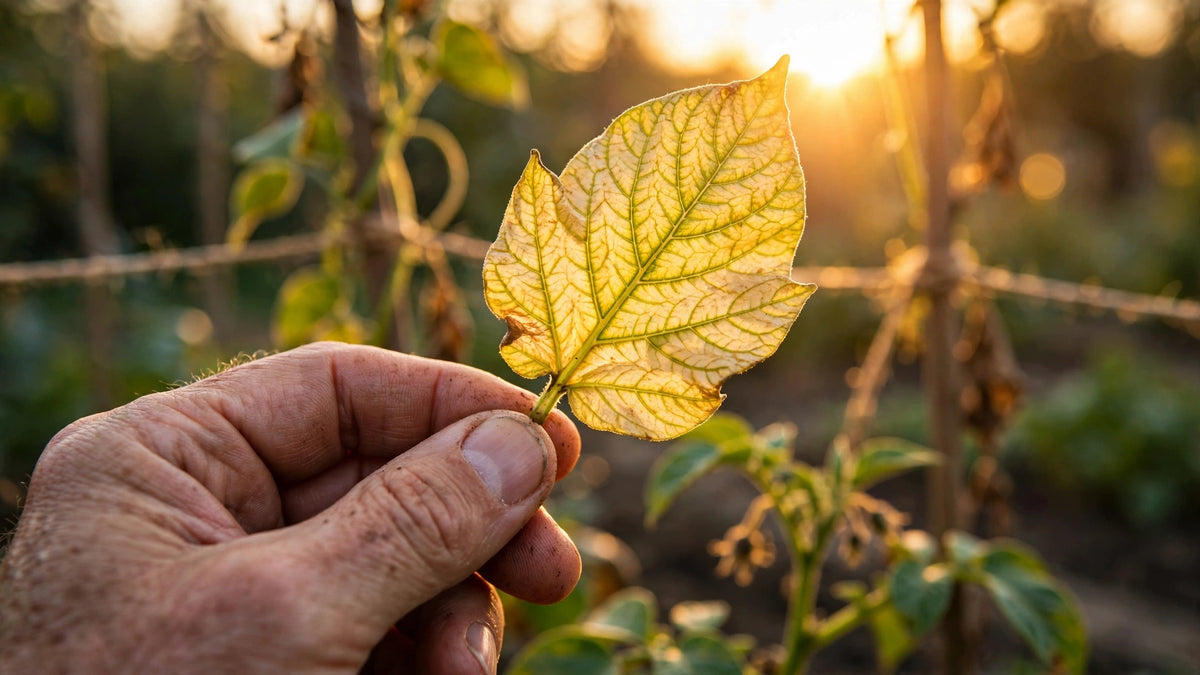
- Magnesium deficiency shows up as yellowing between the veins of older leaves, while the veins themselves stay green.
A straight NPK fertilizer won't fix either of these — you need calcium and magnesium specifically. Cal-Mag Extreme or the Organic Crab Shell Calcium Booster (3-3-0) both target this directly, and are worth adding to your rotation even alongside a balanced NPK feed.
Organic vs. Synthetic Tomato Fertilizer
Both work — the difference is speed, longevity, and what else you're feeding along the way.
- Synthetic (water-soluble): Nutrients are immediately available, ratios are easy to control at each stage, but there's no soil-building benefit.
- Organic: Releases more slowly, builds long-term soil health, and is generally gentler with a lower risk of nutrient burn.
Good organic options for tomatoes include Organic Liquid Fish Fertilizer (NPK 2-3-1) for fast-acting nitrogen and trace minerals, and Organic Liquid Kelp Seaweed for potassium and growth-supporting trace elements. Most experienced growers land on a hybrid: organic amendments for long-term soil health, plus a targeted liquid feed once flowering and fruiting spike the plant's nutrient demand.
Step-by-Step: How to Fertilize Tomato Plants
The schedule below works whether you're starting from transplant or already mid-season.
Feed at planting
Work a balanced starter fertilizer or compost into the soil before transplanting to establish strong early roots.
Begin regular feeding 2 weeks after transplant
Start a liquid feeding schedule as new growth establishes — every 2 weeks with a balanced or slightly nitrogen-forward formula.
Shift the ratio once flowering begins
Ease off nitrogen and lean toward phosphorus and potassium to encourage blooms and reduce blossom drop.
Increase frequency once fruit sets
With MaterAid: 1 oz per gallon every 2 weeks during early growth, increasing to 1 oz per gallon weekly once tomatoes form — fruiting is the highest-demand stage of the plant's life.
Always water at the root zone
Wet leaves invite fungal disease, and most tomato fertilizers aren't formulated for foliar uptake anyway.
Common Tomato Fertilizing Mistakes
- Feeding high nitrogen after flowering starts — the top cause of vigorous, leafy plants that never produce much fruit.
- Inconsistent watering — disrupts calcium uptake and triggers blossom end rot even with adequate soil calcium.
- Over-fertilizing "just in case" — excess fertilizer salts can burn roots and reduce yield rather than boost it.
- Ignoring secondary nutrients — a perfect NPK ratio won't fix a calcium or magnesium deficiency; those need direct correction.
Signs Your Tomato Plants Are Missing Nutrients
| Symptom | Likely Deficiency |
|---|---|
| Overall yellowing, starting with older leaves | Nitrogen |
| Purplish tint on stems or leaf undersides | Phosphorus |
| Yellowing leaf edges, weak stems | Potassium |
| Dark, sunken spots on the bottom of fruit | Calcium |
| Yellowing between leaf veins, veins stay green | Magnesium |
Share:
Why Are Your Yellow Flowers Turning Pale? Fast Fixes
Can You Over-Water and Under-Feed at the Same Time? Diagnosing Mixed Symptoms