

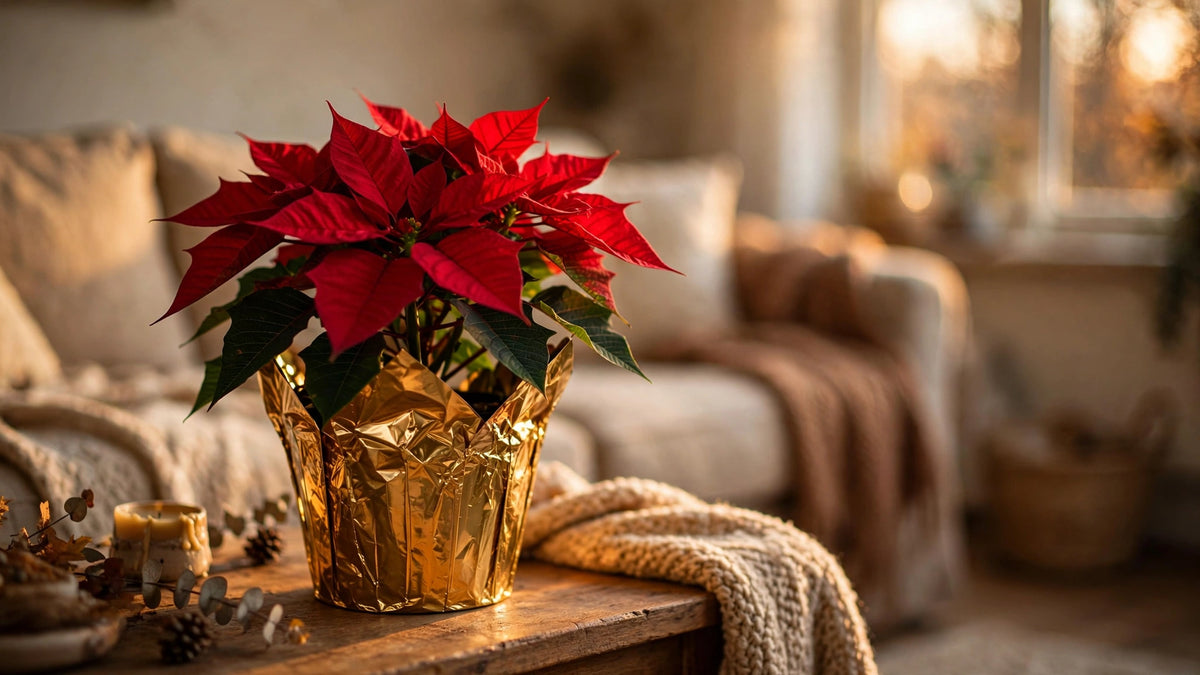
Poinsettias don't need fertilizer while their bracts are fully colored. If you plan to keep yours after the holidays, start a balanced all-purpose houseplant feed about once a month once the bracts fade, following the label directions. If the soil is soggy, fix the drainage before feeding.
Start with the decorative wrapper. Foil can trap drainage water around the pot, leaving roots wet even when the soil surface looks dry.
Lift the Foil Off Before You Think About Food
Remove the wrapper the day you bring the plant home so you can check for standing water. A pot with drainage holes cannot drain properly inside a watertight sleeve.
- Lift the pot out of the decorative sleeve and set it in the sink.
- Let it drain until water stops coming out of the bottom.
- Empty any saucer or outer container that has collected water.
- If you keep the sleeve for looks, replace it only after the pot has drained, and remove it at every watering.
Colorado State University Extension's November 2025 guidance recommends removing foil before watering or punching a drainage hole in it. Either way, don't leave the pot sitting in collected water.
How Often to Water a Poinsettia in Foil or Plastic
Water when the soil surface feels dry to the touch, not on a fixed schedule. A warm room can dry a pot faster, while plastic containers hold moisture longer than clay. Check with a finger before reaching for the watering can.
Water thoroughly until it runs out of the drainage holes, then let the pot drain. Don't give repeated small splashes just because the surface looks dry; check the soil first and water the root ball thoroughly when it needs it.
A poinsettia in plastic may need water less often than a houseplant in terracotta. Keeping the same watering schedule for both can leave the poinsettia's roots too wet, especially when foil traps the runoff.
Why Yellow Lower Leaves Usually Mean Wet Roots
On a newly purchased poinsettia in a decorative container, check for wet roots before assuming yellow leaves mean hunger. Colorado State University Extension lists both overwatering and underwatering as possible causes, along with root rot. Yellow leaves alone don't tell you which problem you have.
A few lower leaves may drop as the plant adjusts from a greenhouse to a heated home. Persistent soggy soil is a stronger warning, particularly when the plant wilts despite having plenty of water. Don't feed it; empty trapped water and let the top inch of soil dry before watering again.
If the soil is dry instead, water thoroughly and allow it to drain. Fertilizer cannot correct either kind of watering problem.
Should You Feed a Poinsettia While Its Bracts Are Red?
No.
Colorado State University Extension advises that poinsettias don't require fertilizer while in bloom. The colored parts are modified leaves called bracts; the tiny yellow-green structures in the center contain the true flowers.
Keep fertilizer for later growth rather than trying to improve holiday color with an extra dose. Unneeded feeding adds fertilizer salts to a small root zone, and excess salts can damage fine roots.
When to Start Feeding and How Strong to Mix
Use the plant's condition, not New Year's Day, as your signal to begin. A healthy poinsettia with fading bracts can move to monthly feeding if you intend to keep it.
| Stage | What to do | Feed? |
|---|---|---|
| Bracts fully colored, plant holding well | Check soil before watering and provide bright, indirect light | No |
| Plant wilted in soggy soil | Correct drainage and let the top inch dry before watering again | No, address wet roots first |
| Bracts fading after the holidays, plant healthy | Continue checking soil moisture | Yes, about once a month at label strength |
| Keeping the plant into spring | Cut back and move to brighter light | Yes, monthly during the growing season |
Choose a balanced all-purpose houseplant fertilizer, such as a 20-20-20 formula. Our 20-20-20 All Purpose Fertilizer with Kelp is one option. Follow its houseplant mixing directions rather than guessing a dose or using a lawn application rate.
You don't need a special poinsettia fertilizer. Avoid heavy granular lawn fertilizer in the pot, and don't compensate for missed feedings with a stronger mixture. For a stressed plant, correct the growing conditions before resuming feeding.
How Room Conditions Keep the Bracts Bright
Light and temperature matter more than fertilizer while the plant is displaying its holiday color. Colorado State University Extension's November 2025 guidance gives these indoor targets:
- At least six hours of bright, indirect light daily. Direct sun can fade bract color.
- Daytime temperatures around 67–70°F and nighttime temperatures around 60–62°F.
- Temperatures above 55°F, below which poinsettias essentially stop growing.
- A position away from heating vents and drafty doors, where passing people won't brush against the plant.
A bright window can still be a poor spot if cold air leaks around it. Keep foliage away from cold glass and check soil moisture more often when indoor heating increases water loss.
Keeping a Poinsettia Past New Year's and Into Spring
Bracts can hold their color until about mid-March. After they fade, you can keep the poinsettia as a green plant; getting holiday color again takes additional care, rather than fertilizer alone.
- Continue watering when the soil surface feels dry, then drain the pot fully.
- Once the bracts fade, begin a balanced houseplant feed about once a month, following the label.
- Move the plant to brighter, indirect light as it resumes growth.
- Cut it back in spring to shape it and encourage new growth, then continue monthly feeding during the growing season.
When your plant is ready for feeding, check the houseplant directions on our balanced fertilizer. If you're unsure which product fits your growing setup, use our plant food contact page before ordering.
Frequently asked questions
How often should I fertilize a poinsettia I just brought home?
Don't fertilize a newly purchased poinsettia while its bracts are fully colored. If you keep it after the holidays, begin a balanced all-purpose houseplant fertilizer about once a month when the bracts fade. Follow the label directions and feed only when the plant is healthy.
Why are the bottom leaves of my poinsettia turning yellow and falling off?
Check soil moisture and drainage first, especially if the pot is wrapped in foil. Colorado State University Extension lists overwatering, underwatering and root rot as possible causes of yellow lower leaves. A few leaves may also drop as the plant adjusts to your home, but wilting in wet soil calls for correcting drainage, not adding fertilizer.
Should I fertilize a poinsettia while it still has red bracts?
No. Poinsettias don't require fertilizer while in bloom, according to Colorado State University Extension. Keep the soil moderately moist and provide bright, indirect light; begin monthly feeding after the bracts fade if you plan to keep the plant.
Can I leave the foil wrap on my poinsettia pot?
Removing it is the simplest way to prevent trapped water. If you keep it, take the pot out before every watering and let it drain completely before replacing it. Empty the saucer too, so the roots don't sit in water.
Are poinsettias toxic to cats and dogs?
Eating a large amount of poinsettia can upset a pet's stomach, so keep the plant away from pets that like to chew leaves. Colorado State University Extension describes them as not toxic, while noting that the milky sap can irritate skin and eyes and that eating a large quantity can upset the stomach. Wash your hands after handling broken stems.
Share:
Seaweed Fertilizer: How to Mix, Apply, and Protect Roots