
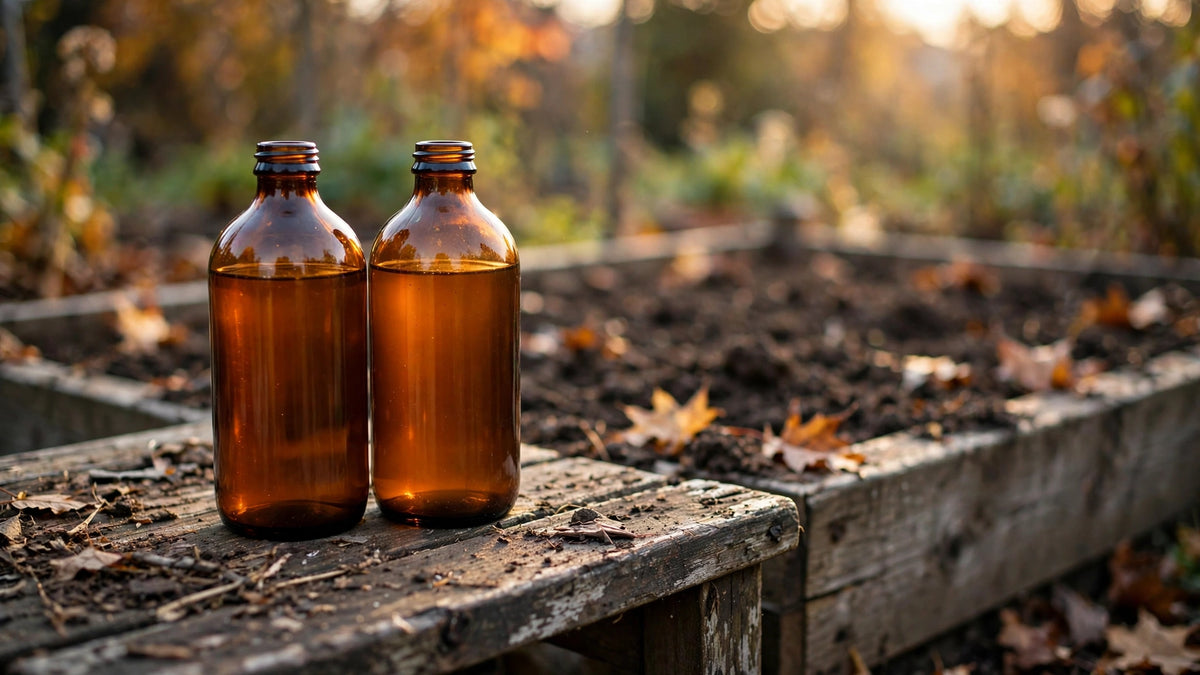
Liquid fish hydrolysate is a fertilizer made by breaking down fish with enzymes rather than cooking it at high heat. It generally retains more fish oil than heat-processed emulsion. Before buying either, check how it was made, how it was stabilized, and its guaranteed nutrient analysis.
Neither process makes a bottle a complete feeding program. Choose for the nutrients your plants need first, then consider what the product contributes to soil life.
What Should You Check on the Label Before Comparing Prices?
Start with the process, not the price. “Fish fertilizer” alone doesn't tell you whether the manufacturer retained the oil or screened out mineral-rich material.
- The process. Look for “hydrolysate,” “enzymatically digested,” or “cold-processed.” These describe biological breakdown rather than the cooking used to make emulsion. Hydrolysate can come from whole fish or fish-processing by-products.
- How the oil was handled. Heating makes oil easier to separate and sell. Retained fats can feed soil organisms, but that doesn't prove one finished fertilizer performs better than another.
- The stabilizer. Cold-processed fish liquid spoils readily, so it needs acid stabilization, usually with phosphoric acid. If the label names formic acid, ask the manufacturer about plant safety; it has shown phytotoxic effects.
- The guaranteed analysis. Screening out bone and scale can reduce mineral content. If you need calcium, look for its listed concentration rather than assuming a fish product supplies it.
Natural fertilizer analyses can vary. Use the guaranteed analysis to calculate nutrient applications, and ask for current product specifications when precise rates matter for a commercial crop.
How Hydrolysate and Emulsion Compare Side by Side
These are general processing differences. A particular bottle's label and technical specifications matter more than its category.
| Criterion | Fish hydrolysate | Fish emulsion |
|---|---|---|
| Processing | Biological breakdown, commonly with enzymes at lower temperatures | Heat processing |
| Fish oil | Generally retained unless removed during further processing | Often separated out |
| Proteins and fats | Broken down biologically | Changed by heat; some components may be removed |
| Stabilization | Requires more acid because the raw liquid spoils faster | Requires less acid than cold-processed hydrolysate |
| Minerals | Depend partly on whether bone and scale remain | Depend on processing and the finished formula |
| NPK | Check the guaranteed analysis | Check the guaranteed analysis |
| Odor | Expect a fish smell | Can also have an objectionable odor |
| Production cost | Lower capital and production costs | Higher capital and production costs |
| Application equipment | Check filtration requirements | Check compatibility despite its established use in soluble-fertilizer equipment |
A higher shelf price doesn't establish better nutrition. Compare the amount of concentrate needed for the same treated area, not just the price per gallon.
Who Hydrolysate Suits, and Who It Does Not
Hydrolysate makes sense when you want fish-derived nutrition with more of the original oil retained. That is a processing advantage, not a promise of faster growth.
Where It Fits
Use it as part of a soil-test-based feeding plan for vegetable beds or other actively growing plants. Its organic compounds also provide food that soil organisms can use. Compost and living roots still do the longer-term work of building soil structure.
Where It Falls Short
Hydrolysate won't correct every nutrient shortage. Its mineral content depends on processing, and its NPK may not meet your crop's requirements at the labeled rate. It also needs stabilization and isn't an odorless choice for indoor containers.
Who Heat-Processed Emulsion Suits, and Who It Does Not
A UMass Amherst greenhouse fact sheet describes liquid fish emulsion as compatible with existing water-soluble fertilizer equipment, despite its thick consistency. In its marigold trial, fish-fed plants were difficult to distinguish from those receiving conventional fertilizer. That supports emulsion's usefulness as plant nutrition, not a claim about superior soil biology.
Where It Fits
Emulsion is a practical option when its nutrient analysis fits your feeding plan and your equipment can handle it. Check dilution and filtration instructions before putting it through a sprayer or fertigation system.
Where It Falls Short
Heat changes the fish material, and removing oil takes away compounds soil organisms could otherwise use. Overheating can also reduce its value as microbial food. Those differences don't establish how much better a hydrolysate will perform in your particular soil.
Does Liquid Fish Fertilizer Work, and Which Type Feeds Soil Life More?
A 2026 study in Scientific Reports found that fertilizers made from fermented carp waste improved spinach growth and mineral accumulation during a 60-day trial. The study tested a particular fermented fertilizer, not every fish product on the shelf. Its results aren't a dilution recommendation for your bottle.
The sources reviewed don't include a head-to-head soil-microbe trial that establishes hydrolysate as better than emulsion. Retained fats and amino acids give soil organisms usable food. That is a reasonable basis for choosing hydrolysate, but not proof of greater fungal activity in your beds.
For a useful garden comparison, leave a similar area untreated and keep other care consistent. Track growth through the season, and remember that greener leaves alone don't measure soil biology. Powdered hydrolysate needs a separate check too, since drying can separate the oil and leave omega-3 fatty acids with it rather than the remaining powder.
What to Feed Now in Beds, Overseeded Lawns and Containers
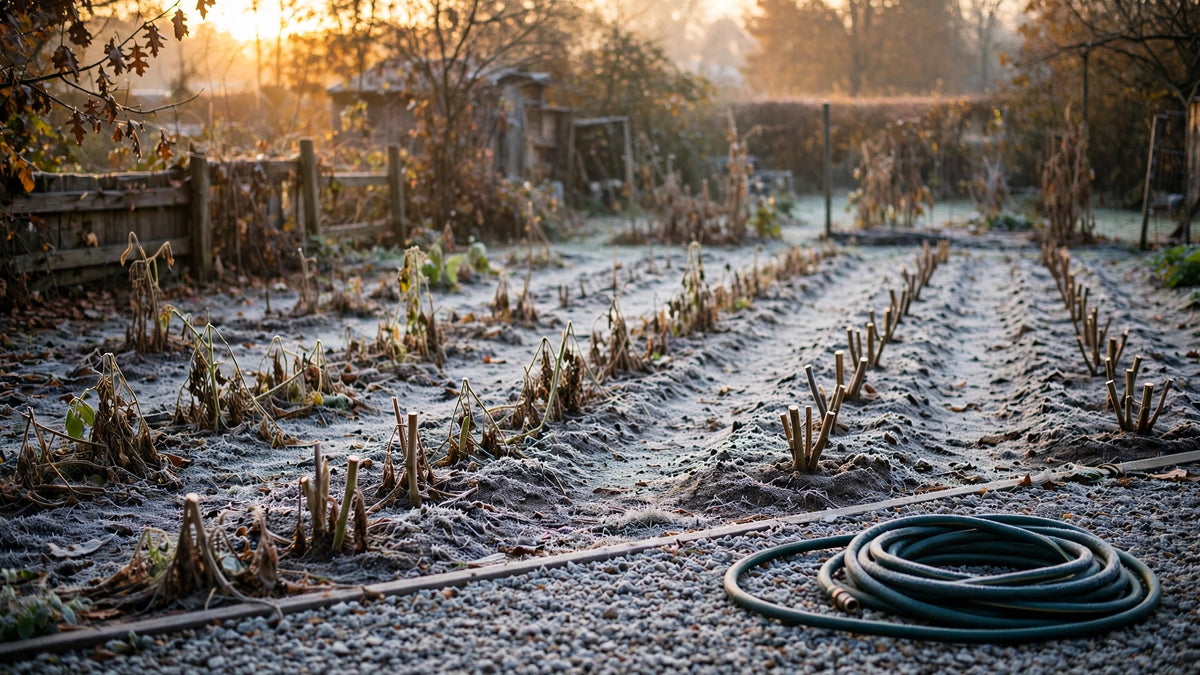
Base fall feeding on active growth and soil temperature, not the calendar alone. Late October in a cold northern garden calls for a different plan than an actively growing vegetable bed in Florida. As soil cools, biological activity slows.
Post-Harvest Vegetable Beds
Apply to moist soil at the labeled dilution and water it in lightly. Avoid feeding that pushes tender growth before a hard freeze. For the rest of the bed preparation, see our guide to recharging vegetable beds in autumn.
Overseeded Lawns
Hold off on heavy nitrogen until seed has germinated and roots are anchored. Keep any fish feeding within the product's lawn directions and your grass's establishment needs; extra fertilizer won't compensate for poor seed-to-soil contact.
Containers Coming Indoors
Reduce feeding as lower light slows growth, following the label's indoor-plant directions. Keep fish liquid off leaves unless foliar use is appropriate for both the product and plant. For outdoor perennials approaching a freeze, our low nitrogen guide explains why heavy feeding can be poorly timed.
What Should You Expect From Smell, Mixing and Drip Lines?
Expect a fish smell, especially when opening the container. It should fade after application; applying to moist soil and watering lightly can reduce lingering odor. Consider that before treating containers in a closed room.
- Test combinations first. Mix a small jar at the intended dilution before combining fish liquid with kelp or humic acid. Watch for separation or clumping. Our guide to timing humic acid covers sequencing.
- Protect drip equipment. Follow the product's straining instructions and your system's filtration requirements. Fine fish particles can clog emitters.
A jar test checks physical compatibility, not plant safety. Each product still needs to permit the intended application and rate.
Which Bottle Fits Your Vegetables, Lawn or Houseplants?
Choose by the nutrient gap you need to fill. A 2-3-1 fish fertilizer supplies nitrogen, phosphorus and potassium, but their proportions and application rate may not meet the crop's full needs. Use a soil test rather than adding more fish liquid to correct an unknown shortage.
For vegetables, flowers and turf, our Organic Liquid Fish Fertilizer (NPK 2-3-1) provides fish-based nutrition. GS Plant Foods ships all products free across the United States. Check the product page and application directions to match the dilution and quantity to your growing area.
If soil biology is your priority, look for a clear explanation of processing and stabilization. “Natural” on the front label doesn't answer either question.
Frequently asked questions
Why is fish hydrolysate more expensive than fish emulsion?
It isn't necessarily more expensive, and a higher retail price doesn't prove a costlier process. Hydrolysate production has lower capital and production costs than emulsion production. Compare the guaranteed analysis and labeled coverage before deciding which bottle offers better value.
Which is better for soil fungi, hydrolysate or emulsion?
The sources reviewed don't establish a winner through head-to-head testing of soil fungi. Hydrolysate generally retains more fish oil, giving soil organisms compounds they can use. That supports a plausible benefit, not a guaranteed increase in fungal activity.
Can I mix fish hydrolysate with kelp or humic acid in the same sprayer?
Only combine them if their application directions allow it, and test a small jar at the intended dilution first. Acidity can affect compatibility, and some mixtures clump or clog nozzles. Follow filtration requirements before using the mixture in drip irrigation.
Is it too late in the fall to feed soil with fish hydrolysate?
That depends on soil temperature and whether plants are still growing. Biological activity slows in cold soil, so don't expect a quick response near winter. Follow the label, apply to moist soil, and avoid encouraging tender growth before a hard freeze.
Can a fish liquid replace a complete fertilizer?
Not automatically. A 2-3-1 fish fertilizer supplies all three primary nutrients, but may not supply enough of each at its labeled rate to meet your crop's needs. Check your soil test against the product's guaranteed analysis before choosing it as your main feed.
Share:
Best Fertilizer for St. Augustine in Fall: What to Use
Cattle Pasture Compaction: What to Check and Fix This Fall