

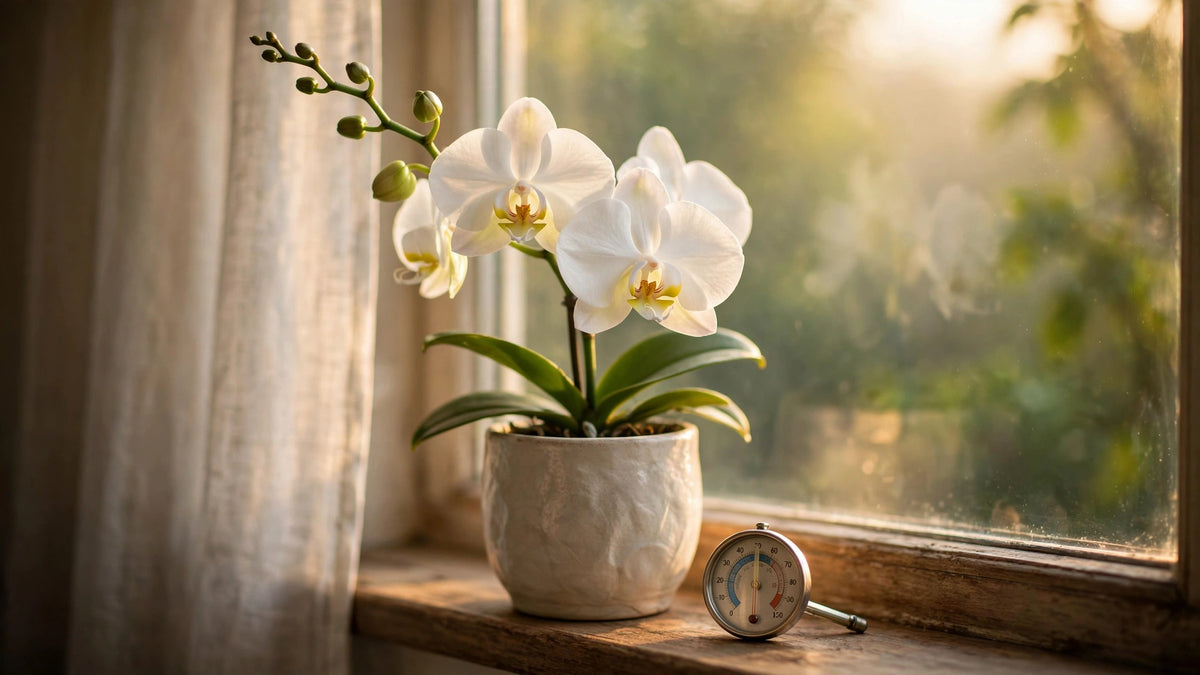
For most indoor Phalaenopsis orchids, choose a balanced fertilizer and apply it diluted to moist bark during active growth. If your orchid has healthy green leaves but no flower spike, check light and nighttime temperatures before adding more feed. Fertilizer supports growth; it cannot replace the conditions that start flowering.
A stronger dose is not the fix for a plant sitting in a dim corner. First check where your orchid lives, then adjust feeding to its growth. That keeps you from adding fertilizer salts to the pot without addressing the reason it will not bloom.
Why Won't My Orchid Spike When Its Leaves Look Healthy?
Green leaves do not tell you a spike is coming. Phalaenopsis need enough light and a sustained stretch of cooler nights to initiate flower spikes. A healthy plant can sit for months without blooming if those conditions are missing.
Check the Thermometer at Night
A warm daytime room reading tells you little about the conditions your orchid gets overnight. Measure near the plant before choosing a new spot.
- Put a thermometer near the orchid and check it in the evening and early morning.
- Look for a position that stays cool at night and bright during the day. Keep the plant away from freezing glass and cold drafts.
- If temperatures stay warm around the clock, address that before increasing fertilizer. Cooler nights are part of the flowering signal for Phalaenopsis.
Check the Light Before the Fertilizer
If an orchid has healthy leaves but no spike, light is the first thing to check. Leaf color alone is not a reliable measure of whether its position is bright enough.
- Check how much light actually reaches the plant throughout the day, rather than judging how bright the whole room looks.
- If it sits in a dim corner, move it toward a bright window or consider a grow light. Introduce brighter conditions gradually to avoid scorching leaves.
- Allow a few months to assess the change. A new position does not produce a flower spike overnight.
What Does Salt Damage Look Like on Orchid Roots and Bark?
Salt buildup leaves clues on the pot and plant. Look for the following signs before blaming fertilizer for a lack of blooms, but remember that damaged roots can also result from watering problems.
- Crusty white or brown residue on the bark or pot rim.
- Brown, dry leaf tips.
- Shriveled roots that do not plump up after watering.
Silvery roots alone are not evidence of damage; healthy Phalaenopsis roots often look silver when dry. If you suspect salt buildup, flush the bark with plain water, let it drain thoroughly, and pause feeding while you assess root health.
How Do You Feed an Orchid Without Burning It?
Use a dilute, regular dose on moist bark rather than a strong dose on dry roots. Keep the solution out of the crown, the center where the leaves meet, because trapped moisture can encourage rot.
Mix Weak and Apply to Moist Bark
Start with the product's mixing directions. “Weakly” means using a fraction of the label strength, not guessing how much concentrate to pour into the pot.
- Dissolve a balanced fertilizer, such as our 20-20-20 All Purpose Fertilizer with Kelp, in water at a reduced strength appropriate for orchids.
- Water with plain water first so the bark is moist.
- Pour the diluted solution slowly over the bark, keeping it out of the crown.
- Let excess water drain completely. Do not leave the pot standing in the runoff.
Rinse the Bark After Feeding
Periodically run plain water through the bark to wash out accumulated fertilizer salts. Let it drain freely rather than collecting in a decorative outer pot. Visible crust on the bark or rim is a reason to check your feeding strength and flushing routine.
Can You Sprinkle Fertilizer on Top of Orchid Bark?
Do not sprinkle dry granules onto orchid bark. They dissolve unevenly and can leave strong pockets of fertilizer against the roots. A fully dissolved, dilute feed is easier to measure and spreads through the pot.
How Should the Weakly, Weekly Rule Change in Winter?
“Weakly, weekly” means feeding at a fraction of the label strength each week during active growth. Follow the plant rather than the calendar: when winter light drops and growth slows, reduce feeding to every two to four weeks. Skip fertilizer while the plant is stressed or sitting in dry, cold air.
| Season and condition | How strong | How often |
|---|---|---|
| Active growth, often spring and summer | Fraction of label strength | Every week |
| Winter, slowed growth | Fraction of label strength | Every two to four weeks |
| Stressed plant or dry, cold air | Do not feed | Hold until the plant recovers |
Does Liquid Kelp Trigger Orchid Blooms, and Can You Mist It?
Liquid kelp is a supplement for general plant health, not a proven bloom trigger or a replacement for balanced nutrition. Our Organic Liquid Kelp Seaweed supports plant vitality, but adding kelp will not make up for insufficient light or consistently warm nights.
Misting Leaves and Aerial Roots
If the product directions allow leaf application, use a dilute solution and keep it out of the crown. Let leaves dry before evening. Aerial roots can receive a light mist of plain water; apply diluted fertilizer through the bark or a soak rather than spraying them with concentrate.
Should You Use Rice Water or Coffee Grounds on Orchids?
Skip both. Rice water adds starches and sugars that can feed mold and bacteria in the bark. Coffee grounds break down slowly and can cake on the surface, interfering with the open conditions orchid roots need.
Neither is a tested orchid feed, so a measured plant food serves better.
When Should You Ask for Help, and What Is Worth Buying?
If healthy leaves and roots still produce no spike after a few months of brighter conditions and cooler nights, review the bark and watering routine. Bark that has broken down and stays wet needs attention before more fertilizer. Ask an experienced orchid grower for help if you cannot tell whether the roots are healthy.
Choose a fertilizer you can measure accurately and dilute consistently. If you want a plant food made with orchids in mind, look at our Orchid Love. GS Plant Foods ships free on all orders. Our Organic Liquid Kelp Seaweed is supplemental care, not a flowering treatment. To ask which product suits your plant or how to read its mixing directions, call 4073100661 or send a question through our contact page.
Frequently asked questions
Can I just sprinkle fertilizer on top of orchid bark?
No. Ordinary dry granules can create concentrated pockets of fertilizer near the roots. Dissolve a suitable fertilizer fully in water and apply it at low strength to moist bark.
Is rice water good for orchids?
Rice water is not a recommended orchid feed. Its starches and sugars can encourage mold and bacteria in the bark, and there is no good evidence that it improves orchid growth or flowering.
Does liquid kelp make orchids bloom?
Liquid kelp is not a proven bloom trigger. It supports general plant health, but Phalaenopsis still need sufficient light and a sustained stretch of cooler nights to initiate flower spikes.
How often should I feed an orchid in winter?
When growth slows in winter, reduce diluted feeding to every two to four weeks. Skip feeding if the orchid is stressed or sitting in dry, cold air. Weekly diluted feeding is intended for active growth, not a fixed year-round schedule.
Can I mist liquid kelp on orchid leaves and aerial roots?
You can lightly mist leaves with a dilute solution if the product directions allow it, keeping the crown dry and allowing leaves to dry before evening. Use plain water for misting aerial roots. Apply diluted fertilizer through the bark or a soak instead of spraying roots with concentrate.


Share:
Organic Fertilizer for Fruit Trees: What to Feed After Harvest
Rose Fertilizer in Fall: When to Stop and What Roots Need