
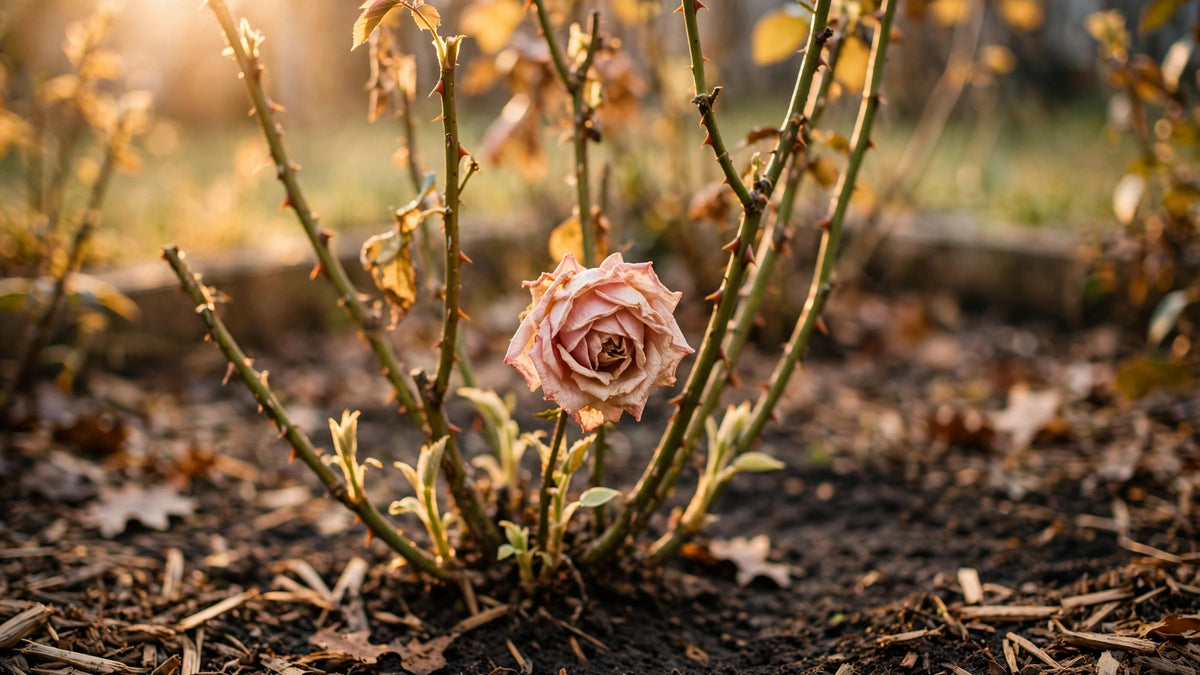
For roses approaching winter dormancy, the best fertilizer is usually none. Nitrogen can keep soft canes growing when they need time to harden before freezing weather. Stop nitrogen feeds several weeks before your first hard freeze, including organic products that supply nitrogen. Then focus on keeping the root zone moist.
If your roses died back after a fall feeding, check when you fed and whether the soil dried out. Disease can also damage canes. Changing fertilizer will not fix those problems.
Why Late Nitrogen Puts Roses at Risk of Freeze Damage
Nitrogen supports leaf and cane growth, but that growth needs time to mature before winter. Soluble nitrogen can remain available in cool soil, so an October feeding may encourage new shoots just as the plant should be slowing down.
Soft, actively growing canes are vulnerable to freezing. The Kansas City Rose Society recommends ending fertilizer applications by mid-August in its region. That cutoff gives roses time to slow their growth before cold weather arrives; it is not a nationwide deadline.
When to Stop Nitrogen, Counted Back From Your First Hard Freeze
Use your local freeze season rather than a fixed national date. A northern garden and a warm-climate garden have different feeding windows. Your county extension office can help you choose a cutoff suited to local conditions.
- Use regional rose guidance. The Kansas City Rose Society recommends a final application no later than mid-August for its area.
- Leave several weeks before a hard freeze. Stop nitrogen early enough for new growth to mature, rather than feeding until cold weather arrives.
- Keep the cutoff after warm spells. A warm week in late fall does not mean new canes will have time to harden before the next freeze.
Mid-August is a regional cutoff
For Kansas City growers, mid-August is the latest recommended application, not a reason to feed a rose that needs no more nitrogen. Elsewhere, follow local guidance rather than extending or shortening the season by guesswork.
Several weeks before your first hard freeze
Put your feeding cutoff on the calendar and check the forecast as autumn approaches. An average freeze date is a planning tool, not a promise that cold weather will wait.
Any warm spell after that
Keep nitrogen off once your feeding season has ended. A few warm November days do not restart the growing season.
Why Watering the Root Zone Matters Before a Freeze
If autumn has been dry, watering is more useful than another feeding. Keep the root zone evenly moist, not saturated, while the soil remains unfrozen. Moisture helps protect roots from drying out through winter.
During the feeding season, water before applying fertilizer and again afterward. The Kansas City Rose Society recommends this practice to prevent burn from concentrated fertilizer salts. If water runs off instead of soaking in, check the soil before adding more fertilizer; a soil wetting agent such as Yucca Wet serves a different role from plant food and should be used according to its label.
Fish and Kelp Still Need a Seasonal Cutoff
The American Rose Society notes that roses take up most nutrients from the top 4 to 8 inches of soil, where the living soil food web helps break down organic material and cycle nutrients. Organic inputs can support that activity during the growing season, but their source does not remove the need for a feeding cutoff.
Our Organic Liquid Fish Fertilizer (NPK 2-3-1) supplies nitrogen. Treat it as a growing-season feed, not a way around the fall cutoff. A low nitrogen percentage still counts when you are trying to stop soft growth.
Our Organic Liquid Kelp Seaweed supports plant vitality and stress tolerance, but that is not a promise of freeze protection. Evidence that kelp measurably hardens rose canes against freezing is limited. Do not use it to justify feeding later.
What to Skip, Including Bone Meal, Epsom Salt and Phosphorus
A soil test should guide nutrient corrections. None of these products is a routine winter-protection treatment.
- Bone meal will not harden canes. It mainly supplies calcium and phosphorus. Phosphorus is essential for plants, but extra phosphorus does not automatically produce more flowers or stronger growth.
- Epsom salt needs a reason. Repeated magnesium sulfate applications can build up salts. Roses are salt-sensitive, and leaf-edge burn can be mistaken for cold injury.
- Extra phosphorus needs a soil-test result. Phosphorus is rarely limiting in established non-agricultural soils. Adding more without evidence of a shortage wastes money.
How to Tell a Magnesium Shortage From Winter Damage
Smaller leaves followed by yellowing between green veins can indicate a magnesium shortage. These symptoms are a reason to investigate, not enough evidence to prescribe Epsom salt.
Start by comparing leaf size. Leaves smaller than the rose normally produces, across several canes, point more toward a nutrient problem than one damaged leaf does.
Then look at the yellowing pattern. Yellow tissue between green veins is called interveinal chlorosis, and more than one nutrient problem can cause it, so the pattern alone does not name the cause.
Inspect the damaged canes next. Freeze injury can leave darkened or shriveled tissue, but dead cane tissue alone does not prove freezing caused it, because disease and drying can also kill canes.
Finally, test before treating. Run a soil test, and if the symptoms stay unclear, ask your extension office for help before you add magnesium.
Clean Up and Mulch Once the Canes Are Dormant
Remove fallen leaves carrying black spot. The fungus can survive on infected debris and become a source of infection the following season. Keep diseased foliage out of a home compost pile that may not get hot enough to destroy it.
Fertilizer cannot correct rubbing canes or poor airflow. Remove diseased material as appropriate, but follow local guidance for major pruning; the right timing depends on your climate and rose type. Avoid late cuts that encourage tender regrowth.
Where roses need winter mounding, wait until the soil has cooled and the canes are dormant. Use the protective material recommended for your region around the crown or graft union. Remove winter protection gradually in spring as conditions warm.
Next Spring, Test pH Before You Restart the Feed
Roses generally have the best nutrient availability at a soil pH of 6.0 to 6.5. The Kansas City Rose Society notes that local soils commonly run above 7.0. Soil sulfur can lower pH, but the amount should come from a soil-test recommendation.
Kansas City-area gardeners can arrange testing through Johnson County’s K-State Research and Extension office or Jackson County’s University of Missouri Extension office. Elsewhere, ask your county extension office which laboratory to use.
The Kansas City Rose Society recommends 2 to 4 pounds of nitrogen per 1,000 square feet over the growing season, divided into 1-pound applications from April through no later than mid-August. That is a regional seasonal guideline, not a single feeding rate. Count nitrogen from every fertilizer you use.
For a natural NPK option when active growth resumes, review our Organic Liquid Fish Fertilizer (NPK 2-3-1) and follow its application directions within your local feeding schedule. Free shipping applies to every GS Plant Foods order. Questions about timing for your garden? Call 407-310-0661 or send a note through our contact page.
Frequently asked questions
When should I stop fertilizing roses before winter?
Stop nitrogen feeds several weeks before your first hard freeze, using local rose-growing guidance to set the date. The Kansas City Rose Society recommends ending applications by mid-August in its region. Organic fertilizers that contain nitrogen also need a cutoff.
Can I fertilize roses in October?
Avoid nitrogen in October if your roses are approaching dormancy or freezing weather. It can encourage soft growth that will not mature before the cold arrives. In warm regions with a longer growing season, follow local extension guidance rather than treating October as a universal deadline.
Is fish fertilizer good for roses in the fall?
Fish fertilizer can nourish actively growing roses, but it still supplies nitrogen. Stop using it before your local winter cutoff, just as you would other nitrogen fertilizers. A natural formula is not automatically suitable for late-fall feeding.
Does kelp help roses survive winter?
Kelp is used to support plant stress tolerance, but evidence that it directly protects rose canes from freezing is limited. It does not replace an appropriate feeding cutoff or winter protection suited to your climate.
Should I water roses before a freeze?
Water if the root zone is dry and the ground is still unfrozen. Aim for evenly moist soil, not standing water. Continue checking moisture during dry autumn weather rather than relying on one watering before the first freeze.

Share:
Orchid Fertilizer: How to Feed Indoors Without Burning Roots
Pothos Fertilizer in Winter: What to Feed and What to Skip