
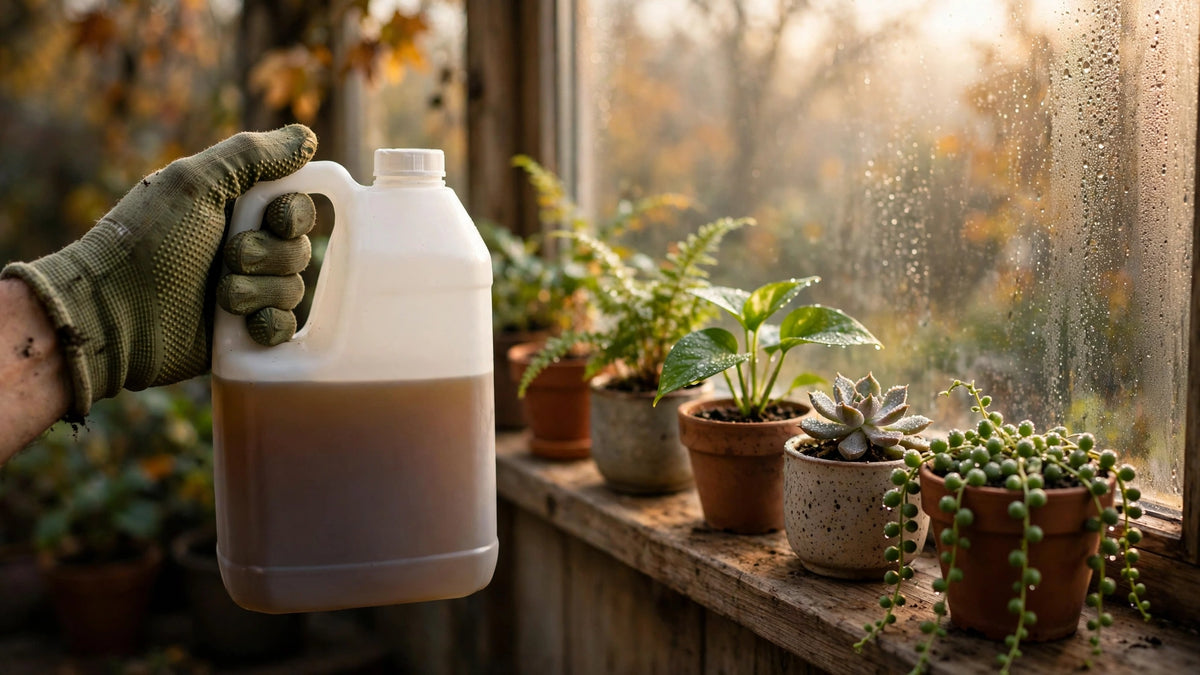
Humic acid is a soil biostimulant made from decomposed organic matter that improves nutrient uptake, water retention, and root development in plants. It doesn't feed plants directly — it makes nutrients already in the soil more available. Apply it as a liquid soil drench, foliar spray, or granular treatment every 4–6 weeks during the growing season.
Key Takeaways
-
Humic acid improves nutrient absorption by up to 30% by chelating minerals and making them more accessible to plant roots and foliage.
-
Derived from decomposed organic matter, humic acid enhances soil structure, increases water retention, and promotes beneficial microbial activity, helping create healthier gardens.
-
Application rates vary by method: liquid forms typically use 1–4 tablespoons per gallon, while granular products require 3–10 pounds per 1,000 square feet.
-
Apply via soil drench, foliar spray, or irrigation systems during active growing seasons for maximum plant benefit and stress resistance.
-
At GS Plant Foods, our Organic Liquid Humic Acid delivers 30% better nutrient uptake using leonardite-derived formulas that are safe around pets and children.
Humic Acid vs. Fulvic Acid
Humic acid and fulvic acid are both extracted from humus, but they behave differently in soil and in plants. Knowing which one fits your goal helps you pick the right product — or use both together.
| Property | Humic Acid | Fulvic Acid |
|---|---|---|
| Molecular size | Larger molecules | Smaller molecules |
| Solubility | Soluble in alkaline water only | Soluble in water at any pH |
| Where it works | Mainly in soil | Soil and directly inside plant tissue |
| Primary function | Improves soil structure, water retention, and long-term nutrient availability | Boosts nutrient uptake speed and micronutrient transport into cells |
| Absorption speed | Slower, longer-lasting effect | Faster, more immediate effect |
| Best used for | Lawns, garden beds, long-term soil building | Foliar feeding, stressed plants, hydroponics |
Most growers get the best results using both — humic acid to build soil health over time, and fulvic acid for a fast nutrient boost. Browse our collection to find the right formula for your setup.
Understanding Humic Acid & Its Role in Plant Growth
Gardeners constantly search for solutions that deliver real results without harsh chemicals. Humic acid has emerged as one of the most effective organic soil amendments for improving plant health, yet many home gardeners remain unclear about what it is and how to use it properly.
This naturally occurring compound transforms soil quality and plant performance through multiple mechanisms, making it an essential component of sustainable gardening practices.
|
GS Plant Foods: Organic Fertilizers That Actually Work 12+ Years Proven Results | Trusted by 1M+ Customers | Pet & Kid-Safe
Grow Naturally Without Compromise:From bestselling Liquid Fish to proprietary blends like Green Envy, GS Plant Foods delivers professional-grade nutrition using kelp, humic acid, and seaweed extracts. Whether you're nurturing orchids, reviving your lawn, or caring for houseplants, their organic formulas absorb faster and reduce runoff—giving you visible results without harsh chemicals. Why Gardeners Choose GS:
Your plants deserve nutrition that works as hard as you do. |

What is Humic Acid & Where Does It Come From?
Humic acid forms through the chemical and biological decomposition of plant and animal matter over thousands of years. This complex organic molecule is one component of humic substances, which also include fulvic acid and humin. The richest commercial sources come from leonardite deposits: prehistoric organic material that hasn't fully transformed into coal, found in sedimentary layers near the earth's surface.
The formation process begins when plants and animals contribute carbon back to the soil after death. Microorganisms break down this organic matter through humification, creating stable compounds that resist further decomposition. Humic acid contains approximately 60% organic carbon, along with nitrogen, oxygen, hydrogen, and sulfur, all of which are vital for supporting soil microorganisms and plant growth.
Unlike synthetic fertilizers that provide only basic NPK nutrients, humic acid functions as a biostimulant. It doesn't feed plants directly; rather, it improves how plants access and utilize existing soil nutrients. This distinction makes it valuable for gardeners who want to maximize the effectiveness of their fertilization programs.

Humic acid forms naturally over thousands of years from decomposed organic matter and contains 60% organic carbon that feeds beneficial soil microorganisms.
Key Benefits of Humic Acid for Plant Health
Enhanced Nutrient Uptake
The primary advantage of humic acid is its ability to enhance nutrient absorption by chelating minerals. Chelation binds positively charged nutrients, such as iron, calcium, magnesium, and zinc, into forms that plants can more easily absorb through their root systems.
This chelating property proves especially valuable in soils with nutrient availability issues. Sandy soils with low cation exchange capacity struggle to retain minerals, while alkaline soils often lock up iron and other micronutrients. Humic acid addresses both problems by holding nutrients in plant-available forms.
Improved Soil Structure & Water Retention
Humic acids bind fine soil particles together, creating aggregates that improve aeration and drainage in heavy clay while increasing water retention in sandy soils. This dual action creates balanced growing conditions where roots can breathe and access moisture effectively.
The improved water-holding capacity becomes particularly valuable during drought stress. Plants growing in humic-enriched soil demonstrate better resistance to environmental stressors, including heat and water scarcity. This resilience translates into healthier plants that continue to grow even under challenging conditions.
Stimulated Root Growth & Microbial Activity
Humic acid promotes robust root development, particularly vertical growth, enabling plants to access deeper soil layers. Enhanced root respiration and formation create stronger, more efficient plants capable of supporting increased above-ground growth.
Beyond direct plant effects, humic acid feeds beneficial soil microorganisms. A thriving soil food web improves nutrient cycling, accelerates decomposition of organic matter, and increases natural disease resistance. The organic carbon in humic acid serves as an energy source for these microscopic workers that maintain soil health.
Can You Use Too Much Humic Acid on Plants?
Humic acid is low-risk compared to synthetic fertilizers, but overapplication can still cause problems. Too much can tie up micronutrients like iron and zinc, making them less available rather than more. In containers and hydroponic systems, repeated overdosing can also raise salt concentration in the growing medium, which stresses roots and can stunt seedlings.
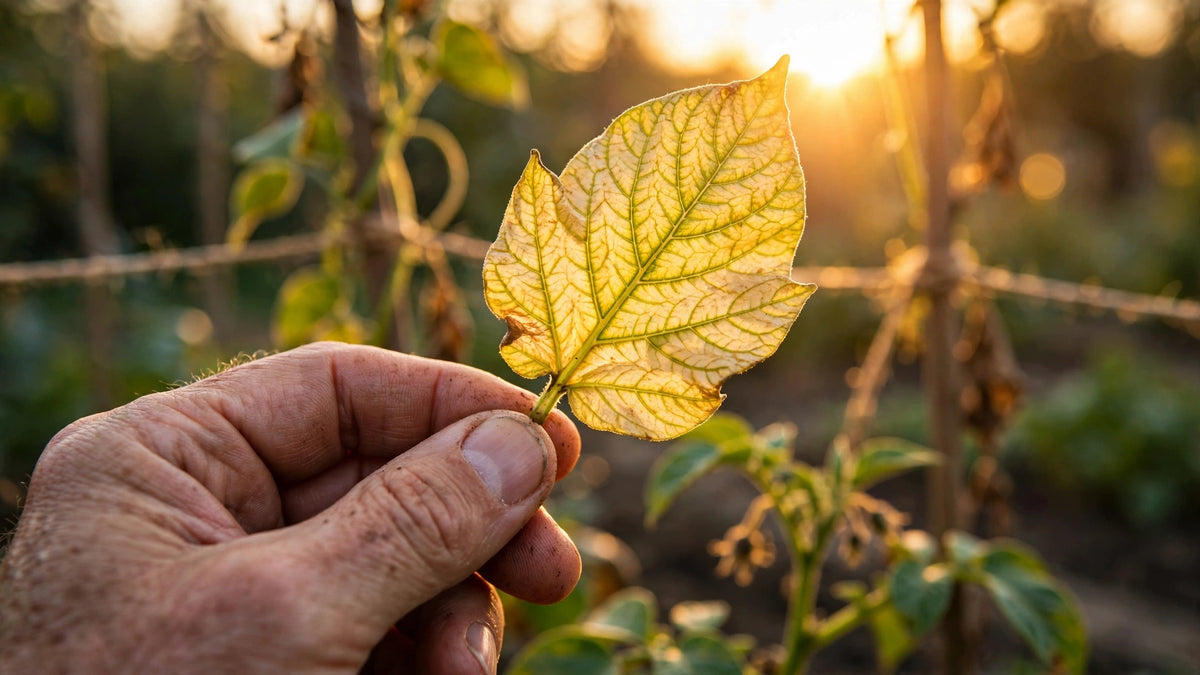
Watch for these signs of overuse: leaf yellowing despite fertilizing, slowed growth in young plants, or a white mineral crust on the soil surface in containers. If you see any of these, flush the soil with plain water and skip your next 1–2 scheduled applications before resuming at a lower dose.
As a rule of thumb: stay within the dosage ranges above, never apply to seedlings at full strength, and always dilute granular or concentrated liquid forms before use.
Tank-Mixing Humic Acid: What Works and What Doesn't
Humic acid tank-mixes well with most liquid fertilizers, seaweed/kelp extracts, and fish emulsion — these combinations are common and generally safe.
Be more careful with:
- Calcium-based products (e.g., calcium nitrate) — humic acid can bind calcium and reduce its availability if mixed directly. Apply at separate times, at least a few days apart.
- Copper- or metal-based fungicides — humic acid can chelate these metals and reduce fungicide effectiveness. Avoid tank-mixing; apply separately.
- Strongly acidic or alkaline products — extreme pH can cause humic acid to precipitate out of solution and clog sprayers.
Always do a small jar test before mixing anything new: combine a small amount of each product in a jar and check for clumping, separation, or discoloration before mixing a full batch.
Humic Acid Dosage Recommendations
Proper dosage varies based on application method, soil conditions, and product concentration. Most liquid humic acid products contain 10–12% active humic acids by dry weight, though concentrations range from less than 1% to over 70% in some formulations.
For liquid soil applications, gardeners typically use 1–4 tablespoons of concentrated humic acid per gallon of water every 4–6 weeks during the growing season. Granular products require 3–10 pounds per 1,000 square feet, mixed into the top few inches of soil.
Commercial agricultural rates differ significantly. Professional applications range from 0.5 to 10 gallons per acre for liquid products, depending on crop type and soil conditions. Sandy soils with low organic matter benefit from higher rates, while heavy clay soils respond well to lower amounts.
Start with conservative rates and increase gradually based on plant response. Excessive application can cause temporary nutrient imbalances, though humic acid generally poses a lower risk than synthetic fertilizers. It won't burn plants even at elevated concentrations.
How to Apply Humic Acid to Plants

Apply humic acid through soil drenching, foliar spraying, or irrigation systems every 4–6 weeks during the growing season for optimal nutrient uptake and plant health.
Soil Drench Application
The most common application method involves dissolving humic acid in water and applying it directly to the soil around plant roots. This technique ensures maximum contact between humic acid and the root zone, where nutrient uptake occurs.
Mix the appropriate amount of liquid humic acid into a watering can or bucket, ensuring it is thoroughly dispersed. Apply to moist soil at planting time or during the growing season, then water thoroughly to move the solution into the root zone. Best results occur when applying to already-moistened soil rather than dry ground.
For container plants and houseplants, dilute humic acid to 1 tablespoon per gallon and use as a regular watering solution every 4–6 weeks. This frequency maintains consistent soil enrichment without oversaturation.
Foliar Spray Method
Foliar application allows plants to absorb humic acid and associated nutrients directly through leaf surfaces. This method provides faster results than soil application but should complement rather than replace root-zone treatments.
Prepare foliar sprays by diluting liquid humic acid at a ratio of 1:10 to 1:50, depending on the product concentration. Apply during early morning or evening hours when temperatures are cooler and humidity is higher. These conditions maximize absorption while minimizing the risk of leaf burn.
Spray leaf surfaces until fully wet, ensuring coverage of both upper and lower leaf surfaces. Some products may leave temporary brown residues on foliage, though rainfall or irrigation typically removes these stains.
Through Irrigation Systems
Gardeners with drip irrigation or automated watering systems can incorporate humic acid into their regular irrigation schedule. This method distributes humic acid evenly across large areas with minimal labor.
Mix humic acid into irrigation water after filtration to prevent clogging. Continue irrigation for at least 2 hours after application to flush lines and maximize nutrient distribution throughout the root zone. This extended irrigation ensures humic acid reaches deep into the soil profile rather than remaining at the surface.
How Soil Type Affects Your Humic Acid Application
Your soil type changes how humic acid behaves and how often you should apply it.
- Sandy soil — drains fast and holds nutrients poorly, so humic acid leaches out sooner. Apply at the low-to-mid end of the dosage range, but more frequently (every 3–4 weeks).
- Clay soil — compacted and slow-draining. Humic acid helps break up compaction and improve aeration over time. Use standard dosage; effects build up gradually, so don't over-apply expecting faster results.
- Loam soil — balanced structure; follow the standard label dosage and 4–6 week schedule.
- Potting mix / soilless media — lower buffering capacity than garden soil, so salts and nutrients concentrate faster. Use the lowest end of the dosage range (see container plants above) and flush with plain water every few applications.
Why Choose GS Plant Foods for Your Humic Acid Needs

GS Plant Foods' Organic Liquid Humic Acid delivers 30% better nutrient uptake using leonardite-derived formulas that are completely safe around pets and children.
At GS Plant Foods, we discovered the power of organic inputs over 12 years ago when a local grower's formula—combining liquid fish, kelp, and humic acid—brought struggling orchids back to life. That experience inspired us to develop an entire line of organic solutions built around these proven ingredients.
Our Organic Liquid Humic Acid delivers premium leonardite-derived nutrition that's completely safe around pets and children. For even greater results, explore our humic-enriched blends that take soil health to the next level.
Root Ruckus combines humic acid with liquid kelp and mycorrhizae fungi for explosive root development, while Green Envy packs 4.3% humic acid plus beneficial bacteria for lawn-focused nutrition. If compacted soil is your challenge, Soft Soil Liquid Aerator uses humic and fulvic acids to loosen tight ground without mechanical aeration.
We've maintained our commitment to pet-safe, kid-friendly formulations across our entire product line. Your family and pets can enjoy the garden while you're building healthier soil. Plus, our humic acid integrates seamlessly into any existing fertilization program, making it easy to upgrade your plant care routine without complicated changes.
Visit GS Plant Foods to explore our full range of organic solutions!
Frequently Asked Questions (FAQs)
Can I use humic acid with other fertilizers?
Yes, humic acid works excellently alongside other fertilizers and actually enhances their effectiveness. The chelating properties help plants absorb nutrients from synthetic or organic fertilizers more efficiently. Mix humic acid with liquid fish, kelp, or soluble fertilizers, but avoid combining with calcium-based products as they may cause compatibility issues.
How often should I apply humic acid to my plants?
Application frequency depends on the form and concentration used. For liquid humic acid, apply every 4–6 weeks during the active growing season. Granular products typically need to be applied only 2–3 times per year. Container plants benefit from monthly applications at reduced concentrations. Adjust timing based on plant response and soil conditions.
Does humic acid work in all soil types?
Humic acid benefits all soil types but shows the most dramatic results in sandy soils with low organic matter and heavy clay soils with poor structure. Sandy soils gain improved water and nutrient retention, while clay soils develop better aeration and drainage. Even balanced loamy soils benefit from enhanced nutrient availability and microbial activity.
Is humic acid safe for organic gardening?
Absolutely. Humic acid derived from leonardite or compost qualifies as an organic input accepted in certified organic production systems. It's a naturally occurring substance that supports biological soil processes rather than replacing them. Look for OMRI-listed products if you require certification, though all properly sourced humic acid aligns with organic principles.
What makes GS Plant Foods' humic acid different from other brands?
At GS Plant Foods, our humic acid comes from premium leonardite sources and integrates seamlessly with our other organic products, such as fish and kelp, for superior results. We've formulated it to be completely safe around pets and children while delivering the full spectrum of humic benefits. Our 12+ years of experience helping home gardeners achieve professional results means you're getting proven formulations, not experimental products.
*Disclaimer: This information is for educational purposes only. Always follow product label instructions and consult with qualified professionals for advice specific to your region, climate, and growing conditions. Individual results may vary based on environmental factors, soil conditions, plant species, and care practices. For specific product recommendations and application rates, visit GS Plant Foods.
Share:
NPK 20-20-20 Fertilizer: Benefits, Dosage & Uses
How to Feed Plants Properly: A Fertilizer Guide